Wednesday, January 23, 2013

Scream to Scream, Scene by Scene: SCENE 14 of Scream 3 (0:51:25-0:55:33)

In this project I attempt to review the entire Scream trilogy scene by scene in chronological order. Heavy spoilers and gore throughout!


SCENE 14 of Scream 3
Length: 4mins 8secs
Primary Characters: Sidney Prescott, Dewey Riley, Gale Weathers, Martha Meeks (Heather Matarazzo), Randy Meeks (Jamie Kennedy), and Detective Wallace.
Pop Culture References:
  • The Godfather Part III and The Return of the Jedi (Used as trilogy examples)
  • Reservoir Dogs (Randy describes a potential crime scene this way)


Are you ready for the worst scene in the entire franchise? Gosh, I HOPE SO!


Oh my gawd. Do you know what's behind that door? WELL DO YOU? It's something far scarier than Ghostface could ever be. And given it's daylight on a heavily populated location, the film's use of the "boo scare" reveal just makes the following character introduction ever worse. Sigh. It gives me great pains to present to you...

"Don't shoot, I'm only 17!"

MARTHA MEEKS AND THE HIDEOUS GOLD ANIMAL PRINT PANTS FROM HEEEEEELLLL!!

No, but seriously, Martha is awful, and her clothes are awful, and this scene is awful, and Heather Matarazzo is awful (in this), and Martha is awful, and her clothes are awful, and her clothes are awful, and Martha is awful.

Well, you get the picture. Literally.

Not only did they have to give Heather Matarazzo an entirely terrible character that wears entire terrible clothes and exists for entirely terrible expository reasons, but they make the actress say ludicrous rubbish dialogue like the bonmot underneath the screencap. I just can't with this scene, you guys. Every single time I watch this movie I skip it. Well, that is unless I'm screening it for somebody for the first time and they've never witnessed the shocking sights that it holds in its tight, leopard print grip. *shudder*


Well done anonymous police extras. I feel much safer knowing Heather Matarazzo can't stab me to death now that you're around. :/

"What are you doing here?"
"There's something you guys should see."


No seriously, what is she doing there and how did she get onto the lot? "I'm the real life sister of somebody portrayed in Stab" probably doesn't get a lot of gorky 17-year-olds onto film sets these days. Could she not express post the video rather than jumping out of film set trailers in retina-burning pants? SHOULDN'T SHE BE IN SCHOOL INSTEAD OF GALLIVANTING AROUND LOS ANGELES?!? "We miss you in Woodsboro," she says. Yeah, I'm sure they're really disappointed that a new serial killing Ghostface is on the scene and has decided to take up residence in another town. Really disappointed. That does remind me of one of Scream 4's most potent moments, when a crime scene onlooker goes all The Birds on Neve Campbell's Sidney and blames her for bringing the killings with her. But we're getting ahead of ourselves, aren't? This scene has plenty more awful stuff to go yet.


RANDY!

And yet still one of the worst decisions they could have made. It's just silly, isn't it? I mean, this shit is morbid for Martha to be holding on to that tape just in case another killer comes around, isn't it?

"Toldja I'd make a movie some day! Well, if you're watching this tape it means, as I feared, I did not survive these killings here at Windsor College. And that giving up my virginity to to Karen Colcheck at the video store was probably not a good idea."
"Karen Colcheck?"
"Yes, Karen Colcheck."
"Creepy Karen?"
"Shut up! She was a sweet person. We were working late, putting away some videos in the porno section and, ya know, shit happens."


Oh lord, the video tape back and forth between Dewey and Randy! :/


I'm glad you find your goody future husband's banter so funny, Gale, but while you're here in this scene, I think we can all agree that we'd much rather be watching Gale & Gale Investigations on another channel.

I'm not gonna lie, guys. I'm debating whether to even include Scream 3's "trilogy" rules. I mean, it's just so silly and tacked on. This would have at least made more sense if, as Scream 3 was originally meant to do, it was set in Woodsboro. Alas.

"The reason I am here is to help you so that my death won't be in vein. So that my life's work will help save some other poor soul from being mutilated. If this killer does come back and he's for real, there are a few things you gotta remember. Is this simply another sequel? Well, if it is: same rules apply. Here's the critical thing. If you find yourself dealing with an unexpected back-story, and a preponderance of expedition then the sequel rules do not apply. Because you are not dealing with a sequel. You are dealing with the concluding chapter... of a trilogy!

That's right, it's a rarity in the horror field, but it does exist. It's a force to be reckoned with, because true trilogies are all about going back to the beginning and discovering something that wasn't true from the get go. Godfather, Jedi, all revealed something that wasn't true that we thought was true. So if it is a trilogy you're dealing with here are some super trilogy rules...

"1. You've got a killer who's going to be super human. Stabbing him won't work, shooting him won't work. Basically in the third one you gotta cryogenically freeze his head, decapitate him, or blow him up.
2. Anyone including the main character can die. This means you, Sid. It's the final chapter. It could be fucking Reservoir Dogs by the time this thing's through.
3. The past will come back to bite you in the ass. Whatever you think you know about the past, forget it. The past is not at rest. Any sins you think were committed in the past are about to break out and destroy you.

And he goes on to wish them good luck and, "for some", a see you soon invitation. Of course, nobody from this group actually did die, nor did the finale end up like Reservoir Dogs. If anything, Scream 4 adhered to the rules of Scream 3 much more than Scream 3 did. Funny to note that there was originally a fourth rule, "never be alone." It was taken out because, hilariously, Gale goes off by herself (and the others let her without a fuss, curiously) as soon as Martha leaves.


An amber-hued hair clip. Seriously. AND THOSE PANTS OH MY GAWD! Of course, it just keeps better and better worse and worse.


!!!!!!!!!!!!!!!

I repeat.

!!!!!!!!!!!!!!!

How long until this late '90s, early '00s fashion trend takes off again?


AND THEN THEY JUST SEND HER ON HER WAY!

Sorry for getting so shouty, but it bears shouting. I mean, she shows up out of the blue in Hollywood, shows them a video tape, and then just walks off into the (figurative) sunset. Hell, I'd be thinking she was a suspect. Especially given what her brother's own video said about the past and the beginning and things never being what they seem. Is it too crazy for these guys to assume (or at least Gale since she doesn't personally know Martha) that maybe Randy was a puppeteer from the very start and now he's using his meek sister (lol, MEEK!) to play out some of his dirty work?

You guys, I just came up with the better ending to Scream 3. Sigh.

Even if that wasn't the case, wouldn't they feel a bit strange about sending this 17-year-old off by herself amongst Hollywood as a serial killer is on the loose specifically targeting people with connections (however fictional) to the original Woodsboro?

Sigh.

Thank gawd that's over because one scene later we revisit Gale & Gale Investigations, which is basically what I want my life to be like, okay?

Scream:
Intro, Scene 1, Scene 2, Scene 3, Scene 4, Scene 5, Scene 6, Scene 7, Scene 8, Scene 9, Scene 10, Scene 11, Scene 12, Scene 13, Scene 14, Scene 15, Scene 16, Scene 17, Scene 18, Scene 19, Scene 20, Scene 21, Scene 22, Scene 23, Scene 24, Scene 25, Scene 26, Scene 27, Scene 28, Scene 29, Scene 30, Scene 31 Scene 32, Scene 33, End Credits

Scream 2
Scene 1, Scene 2, Scene 3, Scene 4, Scene 5, Scene 6, Scene 7, Scene 8, Scene 9, Scene 10, Scene 11, Scene 12, Scene 13, Scene 14. Scene 15, Scene 16, Scene 17, Scene 18, Scene 19, Scene 20, Scene 21, Scene 22, Scene 23, Scene 24, Scene 25, Scene 26, Scene 27, Scene 28, Scene 29, Scene 30, End Credits

Scream 3
Scene 1, Scene 2, Scene 3, Scene 4, Scene 5, Scene 6, Scene 7, Scene 8, Scene 9, Scene 10, Scene 11, Scene 12, Scene 13

Monday, January 21, 2013

Wild Open Waters

Saturday was a long day that began with a discussion about The Guilt Trip on the radio that turned into a delirious vaudeville act of Barbra Streisand jokes, and then developed into a day out at the tennis. I cheered on players I didn't know against other players I didn't know (they turned out to be good matches though, and the games involving more famous players like the Williams sisters and Tsonga were straight set duds), and briefly spotting Novak Djokavic. Naturally I was surrounded by onlookers who were, like me, only out for a perve (er, can you blame us?). By the time I got home late in the evening I needed some movie viewing that wasn't, shall we say, dramatically challenging. After digging through the stacks of films I have, I chose The River Wild. Because, you know, why not?

Directed by Curtis Hanson - "from the director of The Hand That Rocks the Cradle" as the poster of elegantly states - this 1994 actioner is one one of those rare beasts that sees an actress of Meryl Streep's age and stature (she was a 45-year-old, duel Oscar winner at the time) taking charge of a genre film. In that regard, The River Wild had a lot of interest behind it for me, not to mention that this era in Meryl Streep's career is a particularly curious one to navigate with titles like She-Devil, Death Becomes Her, and Postcards from the Edge, which were, at the time, seemingly anomalous for her as they branched into thoroughly unprestigious territory.

However, as the end credits rolled, I couldn't help but wish she'd do this more often. Streep obviously verges more on the mainstream side of the fence than some may think, but she so often takes roles in films that are only fleetingly as good and interesting as her performances in them. Making Mamma Mia! may have defied expectations once, but not anymore, and it'd be great if she could take on an original property that felt truly unique and necessary. I'd love to see her put that enviable skill to another film like The River Wild, or, as I've long wished - and said so on multiple occasions - a scary film in the tradition of The Innocents and The Others. Hell, if they have to remake Gaslight like they keep threatening, I'd dive at the chance to see Streep's take on the material. It would certainly pique my interest, because as much as I look forward to the big screen adaptation of August: Osage County, her casting feels particularly musky.

David Straithairn, Josh C Reilley, Meryl Streep, Kevin Bacon, and the kid from Jurassic Park!

Hell, if they just went and rereleased The River Wild, I am sure its reception would be a hell of a lot more positive than it was in 1994. It's score on Rotten Tomatoes - always an iffy prospect for movies made before, say, 2000 - indicates a 50/50 split between those who didn't like it and those who enjoyed it as little more than disposable genre fluff. It's very easy to hypothesise that if this white water rafting thrill-seaker action flick (yes, I'm guessing that was once used as a way to sell The River Wild!) being made today with, for instance, Jessica Chastain (they'd naturally cast younger, but in a pinch maybe they'd choose Sandra Bullock?) and Jeremy Renner in the Kevin Bacon villain role and being greeted with rapturous response. Given the dire state of action filmmaking, The River Wild's more old school sensibility - lack of plastic CGI, actual identifiably flawed human characters, established adult actors over "next big thing" type gambles - would surely prove a calming respite from a world full of John Carter, The Hobbit, and The Avengers. I mean, the amount of times I've read "good enough" (or a variation of it) in relation to an action film outside the realm of superheroes and sci-fi is alarming.


It's perhaps possible to make the argument that I am projecting modern day action film disappointment on to The River Wild and claiming it to be greater than it actually it. I certainly wouldn't shoot you down if you said that, but I do think the film is a remarkably effective one for many of the reasons I've already stated. Streep's aura of authority looms over the film, propelling its dramatic moments to as high a peak as its adventurous, oft-thrilling action setpieces. I admired the way Jerry Goldsmith's score and Robert Elswit's cinematography go together so handsomely. And I though Hanson's handling of the action scenes - as potentially messy and discombobulating as ones involving white water rafting could get - were all superb. "Meryl Streep kicks ass" isn't a saying that can be uttered all that often, but in doing so here she helped make The River Wild a cut above the rest. B+

Wednesday, January 9, 2013

Scream to Scream, Scene by Scene: SCENE 13 of Scream 3 (0:47:27-0:51:24)

In this project I attempt to review the entire Scream trilogy scene by scene in chronological order. Heavy spoilers and gore throughout!


SCENE 13 of Scream 3
Length: 3mins 57secs
Primary Characters: Detective Kincaid, Gale Weathers, Dewey Riley, Sidney Prescott
Pop Culture References:
  • Kiss Me Deadly and Murders in the Rue Morgue (posters on Kincaid's wall)


I love that Kincaid (or, ya know, the set decorator) has a newspaper clipping on the wall headlined "A 'Nice Vice'". I can only imagine that it's a puff piece about himself that he hangs on the wall in prize position near posters for old scary movies like Kiss Me Deadly and Murders in the Rue Morgue.

"Who knows more about Maureen Prescott than her own mother?"

Er, considering you just admitted that Sidney once identified the wrong killer in court and that it's documented Sidney didn't know her mother's scandalous past before Tatum went all Richard Gere on her, you're probably not gonna get much out of her.

Also: 2000 was a popular time for baggy dress shirts, wasn't it? Christ, even I had some at the time. They were my "formal" look. LOLOLOLhate.

"Do you wanna have this conversation with a polygraph?"
"Was that a threat, Detective?"
"When it's a threat, you'll know it."
"Was that a threat?"
I think this dialogue is meant to be menacing, or something. Is it meant to be setting up Kincaid as a potential suspect because (oh dear) he likes scary movies and may have an anger issue. It's hard to tell, I'm too dazzled by Ehren Kruger's sparkling dialogue in this scene. To wit:

Boys, boys, let's compare our gun calibres later!"

What entendre!

Also: It was a complete accident that I paused the video on that moment with Courteney's face doing... whatever the hell it is it's doing. I'm not sure what it is, but you never can tell these days with her face.


Sid making a superstar entry into the LAPD station, of course.


Erotic.

The music in this reunion scene between Sid and Dewey, as well as Sid and Gale directly afterwards in Kincaid's office, is really terrible. It's thick like syrup like everybody on the production forgot where they were and decided to make it into a scene from a TV movie about a kidnapped girl being returned to her mother 20 years later. Or something. What would I know?


So apparently Neve Campbell is on Grey's Anatomy now? Or she was? I'm not sure. Anyway, she gave an interview where she discussed working about with Patrick Dempsey and it just reminds me how strange is seems now for the man to have been cast in Scream 3.

Did you have fun reuniting with Patrick Dempsey, having done a Scream movie together?

CAMPBELL: Yeah, it was really fun! I hadn’t seen him since Scream, so it had been at least a decade. He’s a great guy. They’ve been on that show for nine years, so they definitely know what they’re doing. It was fun to be around a group who have been working together for so long.

Any chance of there being a Scream 5?

CAMPBELL: We’ll see. I’m not sure they’re going to make it, to be honest. If that were to come up again and they were to approach me, I’d have a chat with them about it.

Hmmm.


I think in this scene, amongst some others, you can really tell Neve Campbell wasn't entirely with it on Scream 3. I don't mean "with it" in the sense that, say, Lindsay Lohan isn't with it anywhere anytime anymore, but "with it" in the sense that she probably didn't feel particularly inspired about making the film. Her role was already reduced significantly, almost to a supporting role for half the run time, and here she barely seems to raise a pulse as she finds out her mother is a significant part of the investigation. She was, however, totally "with it" in Scream 4 in case you're wondering.

Of course, upon seeing the photographs Sidney asks to go to the place they were taken. That means two things: a) more amazing Gale and Gale murder investigations, b) the worst cameo in the entire franchise. The worst everything in the entire franchise, actually. I shudder just thinking of it. We'll get to that next time though.

Scream:
Intro, Scene 1, Scene 2, Scene 3, Scene 4, Scene 5, Scene 6, Scene 7, Scene 8, Scene 9, Scene 10, Scene 11, Scene 12, Scene 13, Scene 14, Scene 15, Scene 16, Scene 17, Scene 18, Scene 19, Scene 20, Scene 21, Scene 22, Scene 23, Scene 24, Scene 25, Scene 26, Scene 27, Scene 28, Scene 29, Scene 30, Scene 31 Scene 32, Scene 33, End Credits

Scream 2
Scene 1, Scene 2, Scene 3, Scene 4, Scene 5, Scene 6, Scene 7, Scene 8, Scene 9, Scene 10, Scene 11, Scene 12, Scene 13, Scene 14. Scene 15, Scene 16, Scene 17, Scene 18, Scene 19, Scene 20, Scene 21, Scene 22, Scene 23, Scene 24, Scene 25, Scene 26, Scene 27, Scene 28, Scene 29, Scene 30, End Credits

Scream 3
Scene 1, Scene 2, Scene 3, Scene 4, Scene 5, Scene 6, Scene 7, Scene 8, Scene 9, Scene 10, Scene 11, Scene 12

Monday, January 7, 2013

Fiona Shaw's Gangster Squad


Did you know, Mr Bleichert, that Ramona Boulevard is named after me."
"I didn't."
"When Emmett married me for my father's money, he promised my family that he would use his influence with the city's zoning board to have a street named after me. But all he could manage was a dead-end block in a red light district. In Lincoln... Hhhh-eights. Are you familiar with the neighbourhood, Mr Bleichert."
"I grew up there."
"Yes, well, then you'll know that Mexican prostitutes expose themselves from windows. I hear many of them know Mr Liscott by name!"
"Shut up!"
"I will sing for my supper when Mayor Bowran comes to dinner, but not for Madeleine's male whores. He's a common policeman, my god! How little you think of me.

The above is a transcript of one of Fiona Shaw's two incredibly memorable scenes from Brian De Palma's 2006 retelling of the famous "Black Dahlia" murder. It is inarguable one of just many incredibly odd scenes to be found across De Palma's altogether messy film, The Black Dahlia. A film that reached such sky high levels of badness that it veered directly into unintentionally camp laugh riot. Shaw, it would seem, is the only actor the whole affair who was able to see what film was being made and went about not only stealing it outright from everybody else, but doing so in a style that continues to amaze me to this very day. In just two brief scenes Fiona Shaw was able to give The Black Dahlia a legacy of some sort beyond being a pretty failure. One person once described her as an "utter loon" and who could argue with that? I know many hate this movie - and with good reason, I'd suggest - but I enjoy it as an exercise in complete and utter foolhardy, Hollywoodised rubbish. Shaw is the lone star amongst a collection of dull, imploding masses of clay (I'm looking at you Scarlett Johannson, Josh Hartnett, Aaron Echkart, and Hilary Swank as a ridiculously unsexy Russian lesbian who doesn't for a single moment look "just like that dead girl", no matter what Johansson's playing-in-mummy's-wardrobe performance would have you believe.)

I bring up The Black Dahlia because last night I saw Gangster Squad, new film by Ruben Fleischer (Zombieland) that got shafted to a January release date after the shooting tragedy at a Colorado movie theatre. Set two years after the events of The Black Dahlia, Gangster Squad shares a similarly styled aesthetic, although one that lacks the lush intricacies of Dahlia. Dione Beebe's overly computerised digital photography and the overly artificial sets don't have any of the eye-popping class of Vilmos Zsigmond's Oscar-nominated cinematography or uniquely specific sets from De Palma's movie. Mark Isham's musical score for the latter is equally fine, especially compared to Squad's Nolan-inspired boom score from Michael Bay collaborator Steve Jablonsky. If the actors are by and large better in Gangster Squad then that's more an indictment of The Black Dahlia, but they still fail to enliven a fairly mediocre movie. Emma Stone looks particularly lost at sea playing a sexy dame with eyes for Ryan Gosling's bad boy cop. That her entrance is a replication of Michelle Pfeiffer's breakthrough into cinema history in Scarface does her little favours.

Still, the film's biggest problem is its tone. Whether this is a result of having to (literally) go back to the editing room and recut the film to, at least, remove any trace of the infamous cinema shooting scene that caused such a controversy after the Aurora massacre, I'm not sure, but I think it's fair to say there was a problem long before that tragedy unfolded. I suspect there's little coincidence that Sean Penn's villain (as well as many of his henchmen) resemble Dick Tracy characters, but why then not go all the way and give the film an entirely cartoonish quality? It certainly would have made some of its more excessive directorial flourishes more palatable. I craved a scene or two that was as maddeningly bonkers as Fiona Shaw's inclusion in The Black Dahlia. I longed for a scene as deliciously in your face and technically savvy as that film's long take as the body of Elizabeth Short was found. Sadly none were to be found.

Similarly, if it's not going to reach the crazy end of the pool, why not go serious and aim for LA Confidential or The Untouchables? It's not as if the cast was wanting for something serious, but the no man's land that Gangster Squad finds itself in does nobody any favours. By the time Josh Brolin's leathery hide was chasing down buggies and latching on them like he was T1000 I'd long since given up interest. Which is a shame, but not altogether unsurprising. The aforementioned cinema scene looked like a film peak from the trailer so its exclusion is as disappointing in that regard as it is unnecessary. But, there's nothing they can do about it now. C

I will say this though: Gangster Squad's end credits are fabulous. It's not actually a diss to say they're the best part of the film because they're genuinely excellent. They were done by a company called Scarlet Letters and if you do go see the film please stay and watch them all.


You show 'em, Fiona!

Sweet Sweetgrass' Baadasssss Ride!

I had long wanted to catch Sweetgrass, a documentary about the modern day dying American west that received minor attention upon its release in 2010 as well as screening at the Melbourne International Film Festival (I didn't see it there, sadly). It's hardly surprising that this film hasn't received a local release given documentaries that work in a strictly anthropological sense are an even harder sell than traditional ones that have been crafted around conventional narratives. Lacking narration, a musical score, or even on screen credits to inform the viewer of who is who, Sweetgrass comes from recordist Lucien Castaing-Taylor and producer Ilisa Barbash. Both work for Harvard and have a list of credits to their name that certainly sounds lofty and indicative of people who would have a film as boutique and yet wide-roaming as this (read the sixth paragraph of this New York Times review to see what I mean).

Filmed in purely observational manner, Castaing-Taylor and Barbash's film was filmed over three years - and took something close to nine years to complete, which sounds like a lot of time before considering their roles as educators - Sweetgrass covers the now defunct shepherd of thousands of sheep across the Montana summer grazing highlands. The film's final image is of an "in memoriam" tag, stating the Reisland-Allestad Ranch, the subject of this documentary, ceased to exist in 2004 after 104 years. It lends Sweetgrass (so named after Sweet Grass County, a part of Montana that this epic march covers) a pang of elegiac sadness, one that is accentuated by the beauty of the landscape. So beautifully filmed, a true environmental documentary about man and nature, it's made with as little interference as possible. Thanks to the blessed diegetic sound design of Patrick Lindenmaier and the refreshingly still camera, every shifting cloud creating a creeping shadow is amplified. With its ghost-like presence (only the occasional sheep seems to acknowledge the camera's existence) creating an almost ethereal atmosphere, the "last of America's cowboys" are given a farewell of heartbreaking simplicity.


I'd love to see this film on a double feature with Kelly Reichardt's Meek's Cutoff. Both together (or alone, really, but together even more so) would send most audiences into a tailspin of boredom given the aversion to what's considered "slow" and "boring". However, much like Reichardt's captivating post-western trip along the Oregon Trail, Sweetgrass raises many questions. Why do these shepherds do what they (no longer) do? One sequence shows one such man on the telephone to his mother as he holds back tears telling her of the arduous journey he partakes every year. "I'd rather enjoy these mountains than hate 'em," he says. The film also asks vital questions about man's interference in the circle of life, as well as our relationship to nature. All three - man, animal, nature - can be unforgiving, but the film's strength is in how it tells the tale of all of them, and does so with powerful simplicity.

The film is as rich in warm-heartedness as it is in heart-tugging sadness. Those gorgeous Montana mountains are as lush with beauty as always, and the way they have been photographed recall the work of a master landscape painter. Sweetgrass is the type of film where a highlight is a zoom in from a long shot into to that of a mountainside as the sight of a herd of sheep becomes clearer and clearer. It's a film where the action peaks with a bear hunt in the dead of night, in near pitch black. The images within are the kind that trains cinematographers and filmmakers would spend a lot of money to perfectly choreograph and lens (see below for examples), but here are as effortless as the spinning of the Earth. There's little that's conventional here for both fiction and non-fiction filmmaking, but what there is a sterling, evocatively made portrayal of a way of life that is all but extinct. A-

Monday, December 31, 2012

New Years Catch Up Part I: The Grey, The Color Wheel, Love Story, On the Road, Pitch Perfect

I always have such grand plans to review all the movies that I see, before inevitably forgetting and letting them slide into the recesses of my mind. Even though it is hard to deny that after that initial flurry of week-of-release excitement the desire to write may dwindle, I also think it's wrongheaded to think discussions on films have a shelf life of their opening weekend box office report. Alas, we're here today to take a look at some films that recently made their way to Australian screens and that I've had a chance to see on DVD. What better way to wring in the new year than with a look back on the old ones?

The Grey
Dir. Joe Carnahan
Country: USA
Aus Rating: MA15+
Running Time: 117mins

Put me in the minority, but I found Joe Carnahan's "Liam Neeson vs the Wolves" adventure film/existential philosophy retreat to be as chilly as its Alaskan setting. From the opening sequence with its nauseating narration and foretelling blasting in neon - "I know this is where I belong, surrounded by my own. Ex-cons, fugitives, drifters, assholes. Men unfit for mankind." Hmm, do you think the film is about these men confronting their demons and atoning for sins? - to its silly, abrupt ending, I found The Grey lacking in both adventure film thrills, and moral quandaries. Featuring a repetitive structure and lacklustre use of the frame from cinematographer Masanobu Takayanagi who far too often fall back on rote imagery and camera placements, I found its lofty aspirations not met.

Seemingly at odds with what it wants to be, Carnahan never truly finds the right balance between the extreme action adventure title that sees Liam Neeson say such ridiculously survivalist dialogue as "we're going to shove [this branch] up this thing's ass, then we're going to eat it." - and the film that attempts to address its themes in a more prosaic manner. A smarter film would have deemed the flashbacks to Neeson's wife unnecessary, and would have found less blatant ways of extolling its virtues about god, faith, and fate. By the seemingly umpteenth wolf chase sequence I had long given up taking The Grey seriously, which is a real shame because the filmmakers were taking it far too seriously for far too long. That it ends on such a high farce moment makes me suspect that Carnahan was unsure how to handle the potentially prickly ethics at the screenplay's core, and instead continued to fall back on scenes that hold as much emotional weight as something from a fictional Liam Neeson Movie spoof. C-

The Color Wheel
Dir. Alex Ross Perry
Country: USA
Aus Rating: N/A
Running Time: 83mins

This film isn't for everybody. In fact, it's very hard to pigeonhole this sophomore feature from Alex Ross Perry (I have not seen his debut, Impolex) as being for anybody in particular, rather unsuspecting open-minded types who respond to its strange charms. Still, charms it has, as the actors navigate their way through a story that covers an entire spectrum, much like the color wheel of the title. It's little surprise to learn that stars Perry and Carlen Altman were stand-up comedians, but their foray into cinema shows remarkable restraint and skill as they limited the use of improvisation and utilised incredibly textural 16mm film. Despite navigating the same sort of boutique twentysomethings-have-feelings-to terrain of other films from the "mumblecore" wheelhouse - as a matter of fact, writer/director/star Perry appeared in Lena Dunham's Tiny Furniture, itself a film that hovered around the fringes of the mid-to-late-'00s movement of ultra low budget filmmaking - The Color Wheel blooms into a refreshing and frequently candid take on bizarre adult-sized children and their fluctuating levels of morose.

Last year's winner of Indiewire's best "unreleased" film, it's easy to see what they saw in The Color Wheel. This abrasive take on familial relationships - the film covers a road trip between complicated siblings - navigates some typically tricky territory, up to and including a final act that spirals in unpredictable directions. It's a testament to the screenplay by Perry and Altman, as well as their performances, that the film is able to veer between such silly sweetness and such peculiar harshness with ease. It has a daring wit to it that is brave and uncompromising as it finds countless entertaining scenarios to thrust its frequently unlikable characters into. The Color Wheel is a striking breakthrough that should get enough people excited to allow Perry to expand beyond the boutique. B

Love Story
Dir. Florian Habicht
Country: New Zealand
Aus Rating: M
Running Time: 94mins

Perhaps a perfect double feature pairing for The Color Wheel is Florian Habicht’s endearing scattershot romance, Love Story. Yes, the title is the same as a much more famous film from the 1970s, but Habicht’s take is a very modern look at romance through the prism of a changing society that is as comfortable with cameras as filmmakers are with new ways of utilising them. Habicht has made a very literal “docu-drama”, a film that purports to be about the burgeoning romance between a New Zealand tourist (that would be director/writer/star Habicht) and a woman he meets on the subway of New York on her way to Coney Island, which is interspersed with crowd-sourced moments of reality (or “reality”, who really knows?) where this curly-haired lank of a man asks people around the city what and how he should do to make this woman love him.

It’s an interesting idea, and Habicht does well to rarely fumble the many balls he has flying about the air at any one time. However, one’s enjoyment of Love Story will surely depend almost entirely on your ability to enjoy the peculiar persona that Habicht inhabits. This New Zealand art student, via Germany, is an odd duck and I’m sure he fits the bill for certain hipster credentials. I found his act wore thin by the film’s final act – I certainly wouldn’t have objected to them cutting 10 minutes from it, or at least the cereal sequence – but at least his sparring partner in Masha Yakovenko remains a visually arresting presence throughout. She lends a particularly melancholy presence to the proceedings that gives the film a far more intriguing authenticity than any number of bumbling scenes of public distraction (although the taxi sequence has to be seen to be believed). Still, it’s a curio originality is a refreshing delight far more often than a hindrance, and that’s something to smile about. B-

On the Road
Dir. Walter Salles
Country: USA / UK / France / Brazil
Aus Rating: MA15+
Running Time: 140mins

The week that Walter Salles’ On the Road was set for release into Australian cinemas, it was announced that the film’s American distributor would be trimming the near two-and-a-half-hour film to a more palatable length. Knowing that Australian cinemagoers got the unabridged version makes for a curious viewing experience. As I watched the much delayed Jack Kerouac adaptation I found myself recalling Francis Ford Coppola’s Apocalypse Now Redux – only further enhanced by the end credits that has Coppola’s name, his son Roman, and the American Zoetrope production house spread throughout – which I viewed for the first time several years ago. It was the only version of the film I could attain and, having never seen the theatrical cut (despite my preference being to see theatrical before any altered editions) I was hardly surprised to discover later which scenes were new additions as they were inevitably the film’s weakest moments. I am intrigued to know what has been cut out of On the Road for its international release if for no other reason than to prove myself right on the film’s virtues and missteps.

Virtues and missteps it most certainly has, mind you. Much to my surprise, I found myself very much enjoying Salles’ more character-minded take on Kerouac’s novel and found its meandering flurries of excess frustrating. For instance, the sidebar sequence with Viggo Mortensen as Old Bull Lee (actually William S Burroughs) felt remarkably similar to the French plantation sequence in the aforementioned Redux. Still, if Salles and his screenwriter Jose Rivera – the two collaborated on the thematically similar The Motorcycle Diaries – are prone to waffling, then they can be more or less forgiven given the task of adapting a novel such as the Beat Generation’s defining moment of On the Road.

Thankfully, he has amassed a collection of collaborators that have served his extremely well. I can take or leave Sam Riley, but the work of Garrett Hedlund, Kristen Stewart, Kirsten Dunst, Tom Sturridge, and a flock of fleeting supporting players manage to make the film’s somewhat ponderous ways far more accessible. Gustavo Santaolalla’s superb locational score plays with an assortment of instruments in frisky ways, whilst the cinematography of Eric Gautier amplifies the sublime location work. Whether it’s a misty dirt road, a cluster of cacti along the Mexican border, a Colorado mining town, or the post-war lights of Manhattan, On the Road constantly looks beautiful and lush. Whether that goes with or against the book’s intentions I’m not sure, but I enjoyed this road trip through America through the eyes of modern day soul-searchers. B

Pitch Perfect
Dir. Jason Moore
Country: USA
Aus Rating: M
Running Time: 112mins

The makers of campus choir comedy Pitch Perfect have clearly modelled their perky musical on the stellar blueprint of Bring It On. While its buoyant energy is as catchy as the smartly arranged pop-heavy soundtrack, director Jason Moore hasn’t quite transferred the risqué wit of his Broadway puppet musical Avenue Q to his debut feature.

Surely nobody can mistake Pitch Perfect for original. Its underdog/girl power storyline is older than the classic teen films it references, most notable of which is John Hughes’ The Breakfast Club. Thankfully, the cast – predominantly actors in their mid-to-late 20s, naturally – give it their all and make for bubbly fun. Anna Kendrick’s barely masked contempt for the material is right in line with her character’s post-emo moping, whilst loud and boisterous Rebel Wilson, Anna Camp, and Brittany Snow are working overtime to wring laughs out of the thoroughly thin material. By the toe-tapping finale, however, its joy de vivre proves too infectious to truly resist.

This review was originally published in The Big Issue

Tuesday, December 18, 2012

The Best (and Worst) Posters of 2012 - Part II


It's distressing when compiling a list such as this and I come to realise that almost any poster featured within the entire top (bottom?) 50 could have been a legitimate contender for worst of the worst. Literally, take your pick and it was a bona fide "worst!" pick at any given moment. I'm not as much a doomsayer as some others when it comes to the art of film key artwork, as I feel every year I have proven there is a substantial number of designs (and specific designers) that are original, unique, interesting, and feature a style worth paying attention to. This year, however, as I made up the list, it really did appear as if the bad designs just kept on coming and coming.

Whether it's bad Photoshop, bizarre spacial arrangements, disinterested star power, or ugly aesthetics, all 50 of the following posters remind me of Satanic garbles from one of those possessed idiots in The Devil Inside (which, yes, features twice on the list). Like the deranged flip side of my favourite poster biases, there are some posters below that bask in garish colours and simplicity that is actually just laziness. All of the 50 images below are an insult to the eyes, and no matter the budget of the film in question ($200mil John Carter; presumably miniscule Leave it On the Floor) they remain unforgivable and inexplicably released to the public. Enjoy, or, better yet, don't. Just shake your head and wonder where it all went wrong.

50. The Moth Diaries
49. Katy Perry: Part of Me 3D
48. Hope Springs


47. Parental Guidance
46. Men In Black 3
45. House at the End of the Street


44. Alex Cross
43. Killing Them Softly
42. Bait 3D


41. Joyful Noise
40. What to Expect When You're Expecting
39. Any Questions for Ben?


38. A Fantastic Fear of Everything
37. The Perfect Family
36. The Babymakers


35. Lay the Favorite
34. Here Comes the Boom
33. Keith Lemon: The Film


32. Tyler Perry's Madea's Witness Protection
31. John Carter
30. Housos vs Authority


29. So Undercover
28. Journey 2: The Mysterious Island
27. The Intouchables


26. Bait 3D
25. The Woman in Black
24. The Devin Inside


23. The Decoy Bride
22. Stolen
21. Battleship


20. Lawless
For being the yearly "Weinstein Fob Off". For the ugly-assed placements (the cast on the vest!!!). For covering Tom Hardy's face with an ugly hat.


19. Playing for Keeps
For the hideous colour uncoordinated panels. For a tagline that begs a response of "NOT THIS!"


18. Think Like a Man
For the OMGSOMANYPEOPLEAAAAAGGH! For terrifying me with this when I went to get a file.


17. Intruders
For failing miserably at whatever it was doing. For serious? For not being scary at all.


16. Alyce
For making want to get a tetanus booster just by looking at it.


15. The Door
The being so entirely drained of imagination. For not even attempting it.


14. Cowgirls n Angels
For shamelessly cribbing off of every other little-girl-and-her-inspirational-pet poster. For just everything.


13. Outside Bet
For... take your pick.


12. The Man Who Shook the Hand of Vincente Fernandez
For the indignity. For the colour palate brown.


11. The Twilight Saga: Breaking Dawn Part 2
For that Photoshop. For the hilarious running action still. For being over.


10. The Cold Light of Day
For being cheap and lazy. For Terminator Sigourney.


9. Dark Tide
For being... overt.


8. Fun Size
For being a fake tanned hot mess for bad Photoshop and bizarre use of space. For the superhero baby who's actually an eight-year-old child (whod've thunk it?)


7. Freelancers
For... well, do I even have to say it?


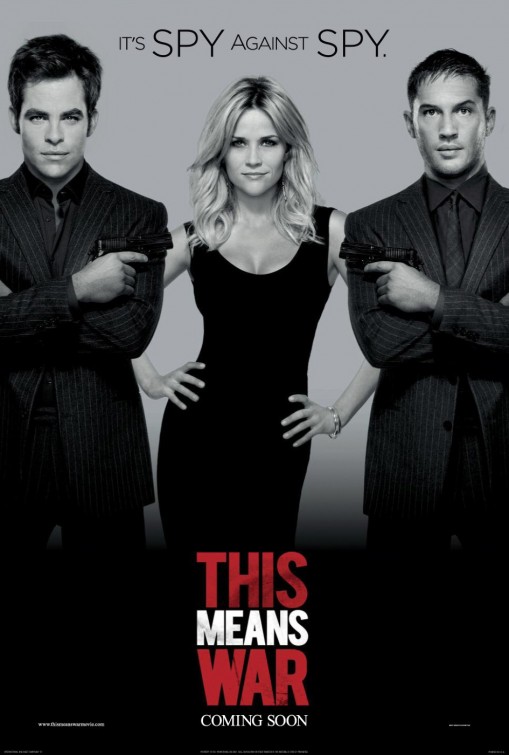
6. This Means War
For being ugly for the most part, but also for having the year's most egregious use of Photoshop imaginable. For not even bothering to hide it.


5. Leave It On the Floor
For "Featuring SWEET DREAMS by BEYONCE". For being one big ol' gay mess.


4. The Devil Inside
For making me want to get ANOTHER tetanus booster.


3. Quartet
For being "part 1980s anti-apartheid concert poster, part Dulcolax ad." (thank you Guy Lodge!)


2. 360
For making a terrible concept even worse. For being so goddamn fucking ugly.


1. Freeloaders
For everything. For having its own star ask "is that real". For everything.

And how about you, dear readers? I know I've forgotten something (I always do), but this year had a particularly, er, stellar crop to choose from.