Showing posts with label MIFF. Show all posts

Monday, October 8, 2012

Review: Wuthering Heights

Wuthering Heights
Dir. Andrea Arnold
Country: UK
Aus Rating: MA15+
Running Time: 129mins

With the visual palate of a mud-stained grass paddock, and scored to the sounds of blustering gales across the British moors, striking adaptation of Emily Brontë’s classic novel, Wuthering Heights, from director Andrea Arnold, makes for a brutal, bruising 129 minutes. Taking the Brontë prose and stripping it of nearly everything but the bare essentials, Arnold’s film – co-written by Arnold and Olivia Hetreed – is one of the most visually and aurally stunning films in years, yet its harsh, and somewhat revisionist, take on the famed material will keep audiences expecting classy period fare at arms length. Styled to within an inch of its life, Arnold’s film is a thing of beautiful, poetic sculptural grace, but beats with a viciously angry heart.

Read the rest at Trespass Magazine

Wednesday, August 29, 2012

MIFF 2012 Review: Keep the Lights On, Facing Mirrors & Mosquita y Mari

Keep the Lights On
Dir. Ira Sacha
Country: USA
Aus Rating: N/A
Running Time: 90mins

... There’s a moment when Lindhardt’s Erik passes a graffiti sign that reads “FAKE YOUR BEAUTY”, which is actually a good motto for Keep the Lights On. Sachs has certainly made his film look very nice, a professionalism that is sadly lacking from much gay cinema, but it doesn’t quite cover up the fact that the movie doesn’t have anything particularly new to say – in the end it’s still a domestic drama about two people torn apart by tragedy. The actors, especially Lindhardt walking a tightrope of fey, are wonderful and Sachs has imbued the visuals with a warm New York glow without ever resorting to travelogue sightseeing imagery. The song score by Arthur Russell could nauseate some, but I found the dizzying crooning to be lovely. Meanwhile, the gay sex scenes are refreshingly realistic and open, plus the screenplay by Sachs and Mauricio Zacharias thankfully avoids preachy grandstanding about Gay Issues (although an out-of-nowhere AIDS scare is on the nose).

Read the rest at The Film Experience

Click the above link also for the reviews of Facing Mirrors and the superb Mosquita y Mari, one of my tip top favourites of the festival!

Tuesday, August 28, 2012

A Berberian Ripper

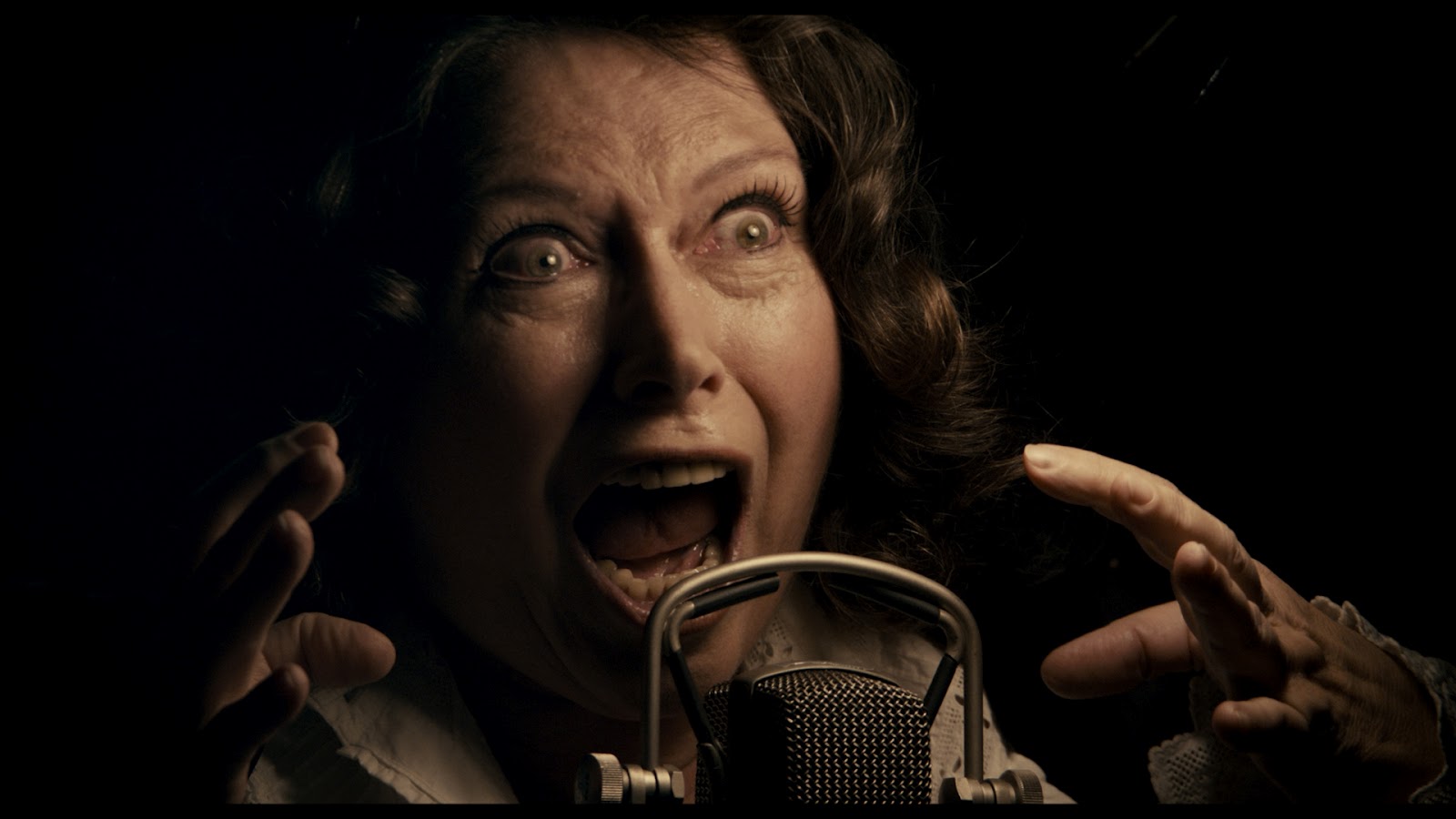
One of the very best films that I saw at this year's Melbourne International Film Festival was Peter Strickland's ode of italo-horror of the 1970s and '80s, Berberian Sound Studio. It was a film that I, nor anybody else it turned out, had really heard all that much about and had chosen purely based on the central premise (which, admittedly, doesn't sound all that exciting). I admit I only chose it for a late evening mid-week slot because I love the art of sound editing - you'll find me at Oscar parties explaining what the difference between "sound effects editing" and "sound mixing" are like a total dweeb - and figured any film that put that process front and centre should be worth a look in. Even if I'm not a fan of Toby Jones.

Berberian Sound Studio is a very peculiar picture, and I sat there for a good chunk of its run time not really knowing what on Earth the whole point was. It was interesting, definitely, but I was waiting for something to happen. I mean, film generally dictates that stuff kinda has to happen. Even if at a film festival the potential is much lower. Still, waited patiently I did and while I was certainly getting a kick out of all the creepy, atmospheric ways that the director was able to utilise the art of sound editing I was eager for something, you know? By the time Strickland's film played out its magic dance around the maypole of looniness in its final act, I was in quiet awe. Not only was the film's final act something that the film needed in order to make its lasting impression, but it was something I personally needed.


I'd longed for a film all festival long that would give me the unnerving sense of the unknown. None of the "Night Shift" titles (essentially those devoted to genre elements, of which Berberian feels like a natural fit, alas...) really did that for me this year. At least none of the ones I saw. My friends and I basically all exited the cinema with a state of perplexed wonder. The rabbit hole of madness that the characters appear to collapse into throughout the second half are so fascinating to watch play out that I ended up having a hoot of a time. You'll never look at British nature documentaries the same! Also, it must be said, it was so great to experience a film and help turn it into one of the must see films of the festival. It's my understanding that people were promptly trying to make subsequent screenings after hearing about the success of the film from us early birds. Berberian Sound Studio is sure to be one of David Lynch's favourite films of the year!


The movie does have a local distributor and I hope for audiences' sake that it gets a theatrical release (those in Sydney will apparently get the chance to see it at the Sydney Underground Film Festival) because - for rather obvious reasons - it is a film that utilises sound design in such a manner that demands a cinema viewing setting. From the crunching of a watermelon with an axe, to the bloody-curling scream of an Italian dubbing actress, Berberian Sound Studio is a film to be enveloped by. It lives and dies on its sound design, and it passes with flying colours. The film itself will prove a confounding wonder for many and a boring mess for others, but its evocation of a very specific time and place had me enraptured. Loved it.

It was completely without coincidence then that some days after the festival I chose to sit down and watch a Blu-ray of Lucio Fulci's New York Ripper. The very sort of Italian horror flick that the aforementioned Berberian demonstrates the making-of process of, this is a nasty little flick albeit one whose power has surely been greatly reduced as a result of the very dated style. The heavy style and dubbed sound of films from this era will never not be confronting - at least initially - but I actually think Sound Studio made me appreciate Fulci's film a little bit more than I otherwise may have. Strickland's film is, I suppose, never not be perfect double feature fodder for a movie of this kind where the lips aren't in sync and the squishy, squashy sound effects are so noticeably over-the-top that you can all but see the chunks of leafy vegetables flying out of the screen.

Initially banned in Australia, New York Ripper follows a city entangled in the vice-like grip of a depraved killer. It certainly takes a more tourist-like look at the city than, say, William Lustig's Maniac - rarely does an establishing shot go by that doesn't feature an NYC landmark or sunny postcard shot, although the majority of the film was clearly not filmed on location ("grindhouse tourism" nails Slant - but that lends it a disconcerting atmosphere that works a treat. Where it doesn't succeed is in Fulci's troubling representation of sex and fetishes, which are treated as more or less demonic, deserving of punishment. There's certainly a filthy leery-eyed old man aesthetic to the whole thing that is rarely comfortable to watch. And then there are scenes where nipples are cut in half by razor blades. Yeah, make up whatever meaning you like for that. Various strands strain for relevance and others have genuine tension. It's a strange movie like that.


I guess it makes sense that I should follow up something like Berberian Sound Studio, itself little more than an expertly crafted technical display, with New York Ripper. Fulci's film is hardly scary, but there's still skill to be found to make it an involving experience. If somewhat limited, obviously.

Monday, August 27, 2012

MIFF 2012 Review: No

No
Dir. Pablo Larrain
Country: Chile
Aus Rating: N/A
Running Time: 108mins

If you’d asked me pre-fest what film I was definitely not anticipating then I surely would have answered Pablo Larrain’s No. I walked out of the Chilean director’s Post Mortem last year after falling asleep and awaking during a slobbery sex scene that made me admit defeat. I had no desire in returning to that well, especially with No hailed as the third and concluding chapter in Larrain’s Pinochet satire trilogy. Why then did I go and see it after all? Well, put that down to festival fatigue and accidentally going to the wrong cinema! I was supposed to be seeing something else, but I’m almost glad I made the mistake, as I may not have ever discovered No. This is still very much a harsh indictment of Pinochet and his rule, but Larrain has substituted the icy-veined harshness of his earlier films and replaced it with a celebratory, robust, truly cinematic sensibility.

Read the rest at Trespass Magazine

MIFF 2012 Review: Alois Nebel

Alois Nebel
Dir. Tomás Lunák
Country: Czech Republic
Aus Rating: N/A
Running Time: 84mins

A black and white, rotoscoped, drama from the Czech Republic. Well you certainly haven’t seen this before. This very sombre film from debut filmmaker Tomás Lunák recalls the dazzling visual style of Christian Volckman’s 2006 French action noir, Renaissance, but a plot that appears to move as slowly as molasses proved to be a bit too much to bear for my tired eyes so late in the festival. Knowing so little about Czech history is certainly a hindrance to enjoying this film beyond the purely visual, but Alois Nebel begins so promisingly with an intense border-crossing sequence that it’s hard not to be slightly disappointed that it didn’t live up to the early potential.

Read the rest at Trespass Magazine

MIFF 2012 Review: Le Tableau

Le Tableau
Dir. Jean-François Laguionie
Country: France
Aus Rating: N/A
Running Time: 75mins

An artist’s canvas is his universe. They can do whatever they like and there are no rules. What then happens if the artist decides they no longer care about what they created and leave their work to sit unfinished? This is the initial premise behind Jean-François Laguionie’s sublimely charming animation, Le Tableau. Made in sumptuously styled animation with a kaleidoscope of bright colours, this briskly-paced French production deals with themes of identity and imagination in a way that should entrance younger viewers, while also allowing adults to get enraptured in the gorgeous animation and lively action. Gorgeously animated – 2D, but accentuated with CGI – Le Tableau is a gem.

Read the rest at Trespass Magazine

Monday, August 20, 2012

MIFF 2012 Review: Mine Games

Mine Games
Dir. Richard Gray
Country: USA
Aus Rating: N/A
Running Time: 91mins

A group of attractive youngsters head to the forest for a weekend getaway in a cabin… Yes, it could be the opening plot line of any number of horror films, not to mention films like this year’s Cabin in the Woods, which satirised the device for all of its clichéd glory. This time, however, it is the beginning of Mine Games, a ludicrous–and occasionally ludicrously entertaining–horror thriller from local director Richard Gray (Summer Coda). Filmed in the same region of America that was home to Twin Peaks and Northern Exposure, this film plays like a long lost sequel to Friday the 13th as an unseen evil stalks the nubile teens in a quasi-labyrinthine möbius strip of revolving ridiculous chills.

Read the rest at Trespass Magazine

This review probably reads more positive that it ought to, but after the vitriol that I heard about the film the night prior I was surprised to myself enjoying it for the most part (despite its obvious flaws). Can I mention that I met Ethan "Voice of a God" Peck at the MIFF closing night after party? We spoke about the Step Up franchise and that is something I will never not find hilarious. He is so freakin' dreamy you guys. He's not going to be starring in To Kill a Mockingbird 2 anytime soon, but who cares when you look and sound like that? Remember when you heard Heath Ledger's voice for the first time? Yeah... *swoon*

Friday, August 17, 2012

MIFF 2012 Review: Ruby Sparks

Ruby Sparks
Dir. Jonathan Dayton & Valerie Faris
Country: USA
Aus Rating: M15+
Running Time: 104mins

I wasn’t sure what I thought when I left my sold out session of Ruby Sparks. I think I was initially taken aback by the fact that it was both written by and stars Zoe Kazan (not to mention co-directed by a woman, Valerie Faris, alongside Jonathan Dayton who both made a big splash several years back with Little Miss Sunshine). What exactly was Kazan trying to say about women? Are they all subconsciously wanting to be manipulated by men? What exactly was Kazan trying to say about men? Do they really only want a woman that they can mould into the perfect being? What exactly was Kazan trying to say about herself? Does she really consider herself the most desirable woman in America, the perfect fantasy that any man would conjure up if forced?

Read the rest at The Film Experience

Monday, August 13, 2012

MIFF 2012 Review: Marina Abramović: The Artist is Present

Marina Abramović: The Artist is Present
Dir. Matthew Akers
Country: USA
Aus Rating: N/A
Running Time: 106mins

It’s a shame that the people who really need to see Matthew Akers’ transfixing debut documentary, Marina Abramović: The Artist is Present, won’t go near it. If the years and years of time spent by newspaper opinion columns bemoaning the “waste” of taxpayer funding for what they deem an artist’s silly folly had been used instead to create something that moves and deeply effects just one person in this world then we’d surely be better off for it. The woman at the centre of The Artist is Present, Serbian born performance artist Marina Abramović, is a fascinating one and this documentary’s final 30 minutes is a testament to the power that her work has over people. As she sat gallantly in Museum of Modern Art (MoMA) for some 736.5 hours, her work took on the stature of legend, so it’s sad to think there are far too many out there who, as one news reporter featured within says, see her as little more than “some Yugoslavian provocateur.”

Read the rest at Trespass Magazine

MIFF 2012 Review: Maniac

Maniac
Dir. Franck Khalhoun
Country: France / USA
Aus Rating: N/A
Running Time: 100mins

Maniac does some things very well, but being a remake of William Lustig’s 1980 skeazy horror classic isn’t necessarily one of them. Sure, Franck Khalfoun’s film takes some of the bare bones of Lustig’s down-and-out slasher – the scalpings, the mannequins, the photographer – but repurposes them to a world that models itself more on the 1980s fetishisation from Nicolas Winding Refn’s Drive than the claustrophobic universe of the original. This isn’t necessarily a bad thing; of course, remakes should try and carve their own identity rather than merely aping the predecessor’s successes, but it is a shift of such tectonic proportions that it put me off balance and was never truly able to recover.

This film is far too slick, calculated, and neatly packaged to have any of the same impact as Maniac 1980 (which, I guess, is what we’ll call it from now on for the purpose of this review). There are many reasons why Maniac 1980 is a classic, but most of all it is because of the downright filthy representation of New York that director Lustig imbued his film with. One of the most true, and sickening, depictions of a dying city ever put on film, New York and its boroughs had never, and certainly hasn’t since, looked quite so oppressive. Maniac 2012 takes a different tact, switching the action (“action”) to Los Angeles and filming the city in a glowing light that is gorgeous in execution, but confounding in reason. Like the aforementioned Drive, from which Maniac 2012 borrows heavily (to put it mildly), as well as Michael Mann’s Collateral, Khalfoun’s film makes a menacing beauty of the city of angels at many times, but you’d be forgiven for finding the horror of its locale less effective. The crystal clear digital cinematography of Maxine Alexandre only further accentuates this.


Among the many differences to the original, this so-called remake shifts the action to a first person POV. It’s as if we’re seeing through the eyes of Frank – a deliberately robotic Elijah Wood – which should make for a more disturbing experience (the mind of a killer and what not), but it instead drains the film of dread and tension. In one scene that recalls the original, set amongst the subway of Los Angeles as Frank chases an attractive woman through the station, there is nothing in the way of heart-pumping suspense. By aligning the viewer with Frank’s field of vision, the girl is rendered more or less inessential to the proceedings, which is a worrying thought. The audience is being put inside Frank’s mind and being forced to experience what he experiences. That isn’t scary. There’s never any moment of relief and elation at a potential victim’s escape because the filmmakers never lets us experience it. It’s virtually impossible to feel what the women Frank stalk and kill feel because no effort is made to represent them.

I don’t necessarily think any of this makes Maniac 2012 a misogynistic film – certainly not as much as, say, VHS - however, the reaction of some of my 11.30pm crowd made me think that they themselves may indeed be misogynist. At least initially, there were whoops and hollers at the gruesome stabbing and scalping of an attractive, scantily clad woman. I worry about their motivations for seeing something like this. Or perhaps its more an indictment on the director who wasn’t able to make the victim anything other than a vacant vessel to be offed, so much so that the especially nasty way she is disposed of is seen as little more than a giggle fest. I certainly don’t think the film is played for laughs, but what does it say about it when it elicits them? I’m not sure, I’m conflicted myself.

There are indeed moments of this movie that frazzled me, but that’s probably inevitable for a film as gory as this. The scalpings are disgusting and brutal, although the hint of CGI blood spray is off-putting. If Maniac 2012 bests the original in any way it’s in the ending, which takes the original’s idea and adds a slice of imagery that’s awfully effective, both thematically and visually. Fans of the original will know it when they see it. The director has some other neat tricks up his sleeve, sure: Using Q Lazzarus’ “Goodbye Horses, immortalised by a dick-tucked Buffalo Bill in Silence of the Lambs; a fabulous Délé Ogundiran as a dreaded, aviator-wearing policewoman (I want a 1980s-set Policewoman movie starring her, please); Wood replicating the poster of the 1980 original in the shiny, reflective surface of a car door, post-scalping. The Drive stylisations are initially very distracting – the opening scene, especially, had my friend and I scribbling the exact same note – but the score (by whom I’m not sure, there is no name listed) is a wonderfully retro throwback that recalls Jay Chattaway’s bustling relic of a musical score from 1980.


Is it interesting that Franck Khalfoun directed P2 all set within one location, and now he’s made Maniac, which is set all within one body? Maybe, but probably not enough to make the exercise a true success. Whereas Maniac 1980 sourced many of its chills from its dead set sense of place and palpable atmosphere of incoming dread, the remake takes a different path. It’s an admirable goal of Khalfoun, as well as his high profile producer Alexandre Aja (who also co-wrote with CA Roseberg and Grégory Levasseur), to take a more European sensibility to the original film, something that was made even more abundantly clear by the humorous (accidental?) inclusion of French subtitles for the first 15 minutes. Much of what you make of Maniac 2012 will depend on whether you think the story is strong enough to work being told in such a radically different fashion. At 100 minutes it is arguable too long – maybe one of the stalks could have been cut, or maybe just tightened up some of the bits between Frank and photographer Anne, rather than including repetitive sky-gazing POV shots and migraine-induced fogginess. It’s an interesting experiment, but it was always going to be hard existing in the shadow of such a great piece of cinema as Maniac 1980 and it’s a shadow it never truly comes to close to stepping out from. C

Sunday, August 12, 2012

MIFF 2012 Review: The Sessions

The Sessions
Dir. Ben Lewin
Country: USA
Aus Rating: N/A
Running Time: 95mins

I suspect it will be easy for cynical audiences to look upon Ben Lewin’s The Sessions as merely a hurdle to get over this upcoming awards season. Yes, it’s about a man with a disability and, yes, it co-stars Helen Hunt, but the mere fact that it got made at all makes it an important film whether you consider it good or not. Given Hollywood’s fussy attitude towards sex (particularly the sex that makes us feel good), it’s strange to see so much talk about The Sessions (nee Six Sessions, nee The Surrogate) in regards to the Academy Awards. That the film is about sex and disabilities and religion, and examines it with maturity and gentle pathos, just makes Lewin’s film that much more of an anomaly worth exploring.

Read the rest at The Film Experience

Thursday, August 9, 2012

MIFF 2012 Review: Jayne Mansfield's Car

Jayne Mansfield's Car
Dir. Billy Bob Thornton
Country: USA / Russia
Aus Rating: N/A
Running Town: 122mins

War is hell, duh. Sadly, Billy Bob Thornton's first time behind the camera in some 11 years (Daddy and Them, unreleased on these shores as far as I am aware) isn't able to mustre many more ideas for Jayne Mansfield's Car, a 1969-set southern drama that looks at the effects of three wars on three different generations of one family. Surely attempting to be "sprawling", the impressively cast ensemble try hard to find tender nuances amongst Thornton and Tom Epperson's screenplay, but an unfocused structure that leaves many characters with nothing to do for long stretches (and sometimes, in Frances O'Connor's case, disappearing from the narrative entirely) makes for an ultimately disjointed affair. The title is a doozy, a reference to the piece of pop culture memorabilia that found itself in a touring macabre sideshow of celebrity worship, but is perhaps too evocative and colourful a name for a film that is so concerned with the more tight-knit confines of family.

The developments that bring the Bedford family - John Hurt, Ray Stevenson, and O'Connor - from their home in England all the way to Alabama certainly pique initial interest. As Hurt and the ex-husband of his now deceased wife, played with typical externalised gruff by Robert Duvall, duke out their own decades-old argument, his children and grandchildren all have their own heavy stuff to deal with. Thornton's Skip is deeply wounded (both mentally and physically) from his time in WWII, the same war that has turned Kevin Bacon's Carroll into a peace-loving hippy. The third brother, Robert Patrick's Jimbo, didn't go to any war and yet carries scars all of his own. Bacon has perhaps the most interesting of the film's many characters, having to deal with the shame he puts upon his decorated WWI hero father's image as well as a son who, quite tellingly, thinks enlisting for the Vietnam War would be a "rock and roll" thing to do. What they would all think of soldiers lip syncing to Carly Rae Jespen's "Call Me Maybe" on YouTube is never broached.


Thornton imbues his film with the same rustic, southern gothic sensibility that he gave his debut, Sling Blade, in 1995. Perhaps Jayne Mansfield's Car was his attempt to return to safer territory after the much-noted debacle of All the Pretty Horses in 2000. Sadly, this more expansive tale never reaches any of the lofty heights it is clearly aiming for. It looks lovely, and and an electric twang-heavy score plus references to era-defining moments in time mean there's usually something to be paying attention to, but for a film that appears to be trying to say so much it never really gets above that initial statement of "war is hell".

The fingerprints of a scissor-happy editor are there on screen as well as off. O'Connor's "The Charge of the Light Brigade" reciting step-sister seemingly vanishes for a couple of days with nary a mention of her name to remind audiences of her whereabouts. She's the highlight of the film - "It's like Gone with the Wind!" - and her vanishing act is truly a mystery. Meanwhile, the film's Wikipedia page (which humorously implies Duvall, Bacon and Thornton play the three central brothers) cites Tippi Hedren as the wife who fled Alabama for the UK, and yet she never once appears on screen. I can't imagine the bulk of the tiresome "old man takes LSD, LOL!" segment was more important, but there you go. Even the collage-style poster appears to feature images that didn't make the final product.


War is hell, duh. That's still all I can figure Thornton's film amounts to. Perhaps if he'd focused on one of the story lines over this more mosaic structure he could have truly buried deeper. As it ends - quite bizarrely might I add - it feels like Thornton hasn't used the themes and the setting in any particularly unique way, with little idea of how to maximise the potential of his big moments. It's deep-fried Americana, but all a bit tasteless. C+

MIFF 2012 Review: Carré Blanc

Carré Blanc
Dir. Jean-Baptiste Léonetti
Country: France
Aus Rating: N/A
Running Time: 80mins

What does one make of Carré Blanc, an altogether confounding debut from director Jean-Baptiste Léonetti? Set in a dystopian future, this sort-of-thriller incorporates elements of experimentation, Greek new wave strangeness, Orwellian dictatorship, and even a penchant for distinctive architecture. Léonetti’s film will be a struggle for some purely due to its severe, barren screenplay and reserved performances. Nevertheless, it works a mesmerising, hypnotic trance that I found rather fascinating. Its oddness has a very rhythmic quality to it that works in harmony with the director’s playful attitudes to imagery.

Read the rest at Trespass Magazine

MIFF 2012 Review: Sound of My Voice

Sound of My Voice
Dir. Zal Batmanglij
Country: USA
Aus Rating: N/A
Running Time: 89mins

One of the hotly buzzed titles of the festival has been Zal Batmanglij’s directorial debut, the unsettling and finely tuned cult drama, Sound of My Voice. A richly textured example of economical filmmaking that was made on a pittance and written as, I can only assume, a starring vehicle for co-writer Brit Marling. Much like last year’s Another Earth, which Marling also co-wrote, Sound of My Voice is a lo-fi approach to a more mainstream genre. Whereas Earth examined the possibilities of redemption and forgiveness against the backdrop of science fiction, Voice sees its characters debate the very notions of reality and accountability within the confines of a cult conspiracy film.

Read the rest at Trespass Magazine

Monday, August 6, 2012

MIFF 2012 Review: Sister

Sister
Dir. Ursula Meier
Country: Switzerland / France
Aus Rating: N/A
Running Time: 100mins

Translating the original title of Ursula Meier’s film, L’enfant d’en haut, is “The Boy from Above”. A very literal title indeed that recalls recent films like The Dardenne Brothers’ The Kid with a Bike. That Meier’s film has been given the initially rather vague English title is surprising, but will soon make sense for viewers who take in this brittle family drama from Switzerland. Winner of the Silver Bear at the Berlin Film Festival, it comes with a story that is ripe for downtrodden doom and gloom, but ends up impressing with its playfulness and wonderfully devoted performances.

Read the rest at Trespass Magazine

Monday, July 30, 2012

MIFF 2012 Review: Holy Motors

Holy Motors
Dir. Leos Carax
Country: France
Aus Rating: N/A
Running Time: 115mins

Like the lyrics of the Kylie Minogue song that humorously pops up midway through this French odyssey oddity, I can’t quite get Holy Motors out of my head. Using this 2001 pop phenomenon on the soundtrack – especially for a film that errs so far from the mainstream that it will actually hurt some of the gay audiences who attend purely for the Minogue factor – was a particularly inspired choice and just one of the many moments that pepper Leos Carax’s wholly original return to cinema. Some 13 years after his last feature-length enterprise, Pola X, Carax’s much ballyhooed film is one that genuinely inspires claims of true originality and is done with such panache that it’s hard not to be impressed simply by pure virtue of its existence.

Holy Motors is many things: maddening, confounding, joyous, “the magic of the act”. It shares much in the realm of unexplained mysteries as David Lynch’s Mulholland Drive - and I don’t just mean the shots of limousines cruising around darkened boulevards – in that to find the “meaning” of the film is probably to go about watching it the entirely wrong way. And yet there’s fun to be had in extracting reason out of the series of events that Carax presents and just how the puzzle, and that’s most definitely what it is, fits together. It’s straightforward, but hardly straight, and that’s a pleasure to behold.


Denis Lavant stars as Monsieur Oscar, a man who, from the scant clues scattered about throughout Carax’s screenplay, spends his days being chauffeured around Paris in the back of a stretch limousine that is driven by the Céline, played by Edith Scob dressed in a white pantsuit from heaven. He sets out on a series of appointments where he portrays characters for the entertainment of invisible watchers, like a real world Big Brother. While it’s hard to determine what the sewer-dwelling Merde who kidnaps passive supermodels has to do with the father picking his daughter up from a party, all ten identities appear to represent facets of the human condition that somebody somewhere is apparently willing to pay to watch. It’s a fascinating concept that makes for fun real world considerations. Is that crazy person barking down the street at 11pm just an actor? What fun to imagine. Furthermore, the implications that Oscar himself is a performance begs the question of whether this man really exists. A prologue suggests that Carax’s entire enterprise is some grand cinematic prank, but who can really tell? Certainly not I after just a single viewing.

Soon enough it appears that Carax is playing his latest film as a sort of modern day Jacques Tati. Using the concept of this man adopting disguises and characters to shed light on the lunacies of the modern world, whether that be passerbys in the street ignoring a old beggar lady or the ridiculous nature of motion capture. The black and white silent film that occasionally pops up throughout the proceedings recalls the nostalgic notions of Hugo and The Artist as Carax uses a vast array of technical abilities from captivating and transformative make-up to perplexing visual effects to turn his vision into reality. Scob donning a mask ala Eyes Without a Face at film’s end feels like Carax turning cinema in on itself like a full circle, perhaps hoping for a blessed melding of the current and the modern with the vitality of the past. One of the most curious moments sees Oscar’s world turn into a ugly mix of pixellated nonsense, while another sees him (perhaps) showing genuine admiration for what computers can do.


It’s a film of juxtaposition and dichotomy and no more is this evident that in the way Carax turns his rather jovial and playful first half on its head and gives his post-musical interlude sequences a mournful sensibility. It’s almost as if Carax himself is doubting his own hypothesis as a splendidly cast Kylie Minogue croons lyrics of a torch ballad: “Who were we / when we were / who we were back then.” That Holy Motors’ final scene (one that must be seen to be believed) is a very definite indictment on the callous nature that film has been replaced by digital, the mere fact that Carax has been able to make such a beautiful, sumptuous, almost endlessly intriguing film using the digital medium is certainly a cause for thought. He certainly couldn’t have made this film with its playful take on structure and narrative in the so-called good old days, and Carax is surely aware of the irony to be found in the loss of one medium forging his own acceleration of creativity in its replacement.

In frequent collaborater Denis Lavant, Carax has found a wonderful partner in crime. Much like the film itself, Lavant never goes truly overboard in any of his portrayals, and yet the madness is most definitely there. Scob and Minogue are lovely, with the popette proving surprisingly well versed in her role as a mirror to Oscar. Jeanne Disson as an unpopular schoolgirl in one of the film’s more restrained sequences is particularly impressive, while Elise Lhomeau’s scene is perhaps the one that viewers should pay most attention to. It’s Holy Motors’ “Club Silencio” in a way.


As it stands, Holy Motors is sure to be the most maddeningly examined film of 2012. An experience in every sense of the word, and yet one that never tailspins into tiresome drivel. I don’t claim to know anything about the rest of Carax’s career – nor the personal life that I have since discovered finds a very definite place in the film’s narrative – but I found Holy Motors to be a very engaging film that will likely surprise people. It’s rich, but never extravagantly so, told from an important voice. A-

Holy Motors screens at the Melbourne International Film Festival (2 Aug-19 Aug) and is released theatrically on 23 August.

Tuesday, August 9, 2011

MIFF Blogathon: End Credits

This blogathon is an initiative of MIFF for their 60th anniversary year. I am one of six bloggers given the mission of seeing 60 films in 17 days and writing, reporting, reviewing and wrangling my way through the tiredness and hunger to bring the festival experience to your computer.

The 17 days of the Melbourne International Film Festival were a hectic, inspiring, memorable, festive, exciting, taxing and exhausting time. I saw some ungodly number of films - I'm counting that terrible 44-minute Louis Garrel film as a full title and bumping my number to 60 - and averaged 3.5 a day, although some days were 5 films long, others a more manageable at 2 a day.

I was surprised to find that so many of the films I saw were actually quite good. Throughout my 16 daily blogathon entries (mostly all written at Midnight after a long day of filmgoing) the number of films rated C+ or lower was thankfully rather low as law averages would suggest at a third of all titles. While, unfortunately, many of the ones I didn't care for I really didn't care for, there were also a whole lot that I not only loved, but really loved. And I even found plenty to enjoy in the films that didn't quite live up to the praise that had been heaped upon them here and around the world (13 Assassins for instance.)

Let's take a look at all the films I saw (plus a few extras that I saw in preview media screenings before the festival) in order from #1 to #60. Each embedded link leads to what I originally wrote on the film, and bear in mind that my opinions on these films will surely fluctuate over time and, in the case of something like The Black Power Mixtape 1967-1975, already has. So what I wrote after seeing a film in the midst of a 60-strong onslaught might not necessarily reflect what I would think about a film if seen free of the festival arena.

1. Drive
(dir. Nicolas Winding Refn)
2. The King of Comedy
(dir. Martin Scorsese)
3. The Third Man
(dir. Carol Reed)
4. Tiny Furniture
(dir. Lena Dunham)
5. Martha Marcy May Marlene
(dir. Sean Durkin)
6. How to Die in Oregon
(dir. Peter Richardson)
7. Melancholia
(dir. Lars von Trier)
8. Natural Selection
(dir. Robbie Pickering)
9. Ruhr
(dir. James Benning)
10. Neds
(dir. Peter Mullan)
11. Jane Eyre
(dir. Cary Fukunaga)
12. Jiro Dreams of Sushi
(dir. David Gelb)
13. The Innkeepers
(dir. Ti West)
14. Tyrannosaur
(dir. Paddy Considine)
15. Beauty and the Beast (dir. Jean Cocteau)
16. Pool Party (dir. Beth Aala)
17. LennoNYC (dir. Michael Epstein)
18. Winter's Daughter (dir. Johannes Schmid)
19. Senna (dir. Asif Kapadia)
20. The Piano in a Factory (dir. Zhang Meng)
21. X (dir. Jon Hewitt)
22. Once Upon a Time in Anatolia (dir. Nuri Bilge Ceylan)
23. Beats Rhymes & Life: The Travels of A Tribe Called Quest (dir. Michael Rapaport)
24. Submarine (dir. Richard Ayoade)
25. Falling for Sahara (dir. Khoa Do)
26. Tomboy (dir. Céline Sciamma)
27. The Turin Horse (dir. Bela Tarr)
28. Bi, Don't Be Afraid (dir. Dang Di Pan)
29. Brother Number One (dir. Annie Goldson)
30. Top Floor Left Wing (dir. Angelo Cianci)
31. Kill List (dir. Ben Wheatley)
32. The Eye of the Storm (dir. Fred Schepisi)
33. Sleeping Sickness (dir. Ulrich Köhler)
34. The Ugly Duckling (dir. (Garri Bardin)
35. 13 Assassins (dir. Takeshi Miike)
36. Living on Love Alone (dir. Isabelle Czajka)
37. Beauty (dir. Oliver Hermanus)
38. The Forgiveness of Blood (dir. Joshua Marston)
39. The Black Power Mixtape 1967-1975 (dir. Göran Olsson)
40. Page One: Inside the New York Times (dir. Andrew Rossi)
41. On the Sly (dir. Olivier Ringer)
42. The Future (dir. Miranda July)
43. Tales of the Night (dir. Michel Ocelot)
44. Toomelah (dir. Ivan Sen)
45. Swerve (dir. Craig Lahiff)
46. Littlerock (dir. Mike Ott)
47. Bobby Fischer Against the World (dir. Liz Garbus)
48. Clay (dir. Giorgio Mangiamele)
49. Cave of Forgotten Dreams (dir. Werner Herzog)
50. Attenberg (dir. Athina Rachel Tsangari)
51. Tatsumi (dir. Eric Khoo)
52. The Triangle Wars (dir. Rosie Jones)
53. I Wish I Knew (dir. Zhangke Jia)
54. Familiar Ground (dir. Stéphane Lafleur)
55. A Useful Life (dir. Federico Veiroj)
56. Michael (dir. Markus Schleinzer)
57. The Little Tailor (dir. Louis Garrel)
58. Norwegian Wood (dir. Anh Hung Tran)
59. Wasted Youth (dir. Argyris Papadimitropoulos & Jan Vogel)
60. Innocent Saturday (dir. Aleksandr Mindadze)
- Post Mortem (dir. Pablo Larraín) - walk out

I also saw three short film packages, but they're hard to rate in a list such as this so I left them out. Nevertheless, the "Melbourne Shorts Program 2" was the best, following by "Melbourne Shorts Program 1" and "Experimental Shorts Program 1".

And in the coming weeks we have titles like Beginners, The Woman and many others getting a theatrical release so who knows how many of the 250+ titles that screened I will eventually get to see?!? Tomorrow I'm going to do some fun little awards and citations for best performances and things like that, my own MIFF Oscar's if you will, but to end this entry I'm going to thank all the people I met along the way this year that helped pull me through my flu-riddled MIFF adventure! It was wonderful to meet all of these people, whether I knew them before the festival or if I was only just finally putting a real life face to a Twitter handle or blog name. So many of these people inspired me to keep chugging along and making me want to write better and with more energy and vigour than I probably would have mustered otherwise. You could say they put the "festive" in the Melbourne Interntaional Film Festival!

Thank you to my Beauty and the Beast death march partner Mel Campbell, that mysterious festival lounge lurker Syms Covington, those marvellous Sydneysiders Alice Tynan, Beth Wilson and Simon Anlezark, the team from AtTheCinema.net including Melburnian Julian Buckeridge, Brisbanite Sarah Ward (plus her husband Darren) and New Zealander in the Cosby cap Greg Bennett. Thanks to the esteemed intelligence of Cerise Howard and Richard Watts for walking out of Post Mortem as well, thanks to Tara Judah and Josh Nelson of Plato's Cave for enlivening many a conversation, thanks to Lee Zachariah and Paul Nelson from Hell is For Hyphenates for being fabulous organisers and seat-savers respectively (as well as fantastic conversationalists, obviously) and to the representatives of Sharmill Films, Potential Films and Umbrella Entertainment, Kate McCurdy, Coreen Haddad and JoJo Warrener respectively. And then, of course, there's Myke Bartlett and Rhett Bartlett who share a name and a similar awesomeness.

Thanks to the master of Greater Union cattle-herding Dave Lamb (and his magic hat), that other amazing MIFF volunteer Suze Stein, the two men from Geelong aka Anthony Morris and Guy Davis and to newcomers Tom Clift, Rich Haridy, Ben Buckingham, Kwenton from Twitch, Goran, Paul Ryan, Ian Barr and anybody else who I spoke to, anyone who tapped me on the shoulder and asked "are you Stale Popcorn?" and anyone who commented here on the blog. You made the experience incredible.

However, the biggest thank you of all must go to my fellow blogathon buddies: Luke Buckmaster, Thomas Caldwell, Jess Lomas, Simon Miraudo and Brad Nguyen. Five of us gave each other daily re-assurance that we were not in fact mad, but merely dedicated cinephiles. I never actually got to meet Brad, which was curious since you'd think seeing 60 films would mean crossing paths once or twice? Yesterday, upon waking up from my near 14 hour slumber I actually was hit by a tinge of sadness that I wouldn't be seeing these wonderful people every day. Alas, now as we somehow crawl back to our past lives of work and film screenings for movies like The Green Lantern, I will look back upon the experience fondly, even if certain aspects of it give me a wobbly stomach.

Click on the "more" label below to see some fun post-MIFF awards to wrap this sucker up!

Monday, August 8, 2011

MIFF Blogathon: Day 16 & 17 (Driving to Page One with Sushi & Attenberg)

This blogathon is an initiative of MIFF for their 60th anniversary year. I am one of six bloggers given the mission of seeing 60 films in 17 days and writing, reporting, reviewing and wrangling my way through the tiredness and hunger to bring the festival experience to your computer.

Page One: Inside the New York Times
Dir. Andrew Rossi
Running Time: 88mins

Unfortunately I had to leave this screening of Andrew Rossi's year inside the news offices of the "paper of record" The New York Times due to an emergency (er, an emergency known as "needing to earn money"), but I have a screener on the way so I'll be able to properly assess then. However, from what I did see I found Page One: Inside the New York Times to be a rather unfocused and haphazardly pieced together documentary.

It's a fascinating topic, and for a New York tragic like myself there should've been plenty to interest me, but it lacks a solid backbone. There are several different movies in Page One: a look at the Wikileaks scandal as seen through the eyes a newsroom; a documentary biopic of an acclaimed writer (David Carr) whose life is much like a film script; an investigation on the dying form known as the hardcopy newspaper and the way technology has both hurt and saved journalism. Unfortunately, instead of simply focusing on one, Rossi chooses a free-flowing structure and never settles. The Wikileaks issue is raised early on and then forgotten, while one scene sees many seasoned journalists being made redundant and either being fired or retiring and yet it never packs much of a punch because we haven't been given enough time to get to know these people. I won't grade it just yet, but will return to it once I've seen the entire film.

Drive
Dir. Nicolas Winding Refn
Running Time: 100mins

I'm going to review this film with a much larger word length sometimes in the future (probably once I've seen it for a second time), but I feel like I need to just say this: Drive is perfect. An excellent choice (however secondary it was after the initial selection, Red Dog, had to be swapped) for a closing night film as it races right to the heart and injects it full of adrenalin and noir-tinged style. It's stylish, cool and gorgeously rendered as it pulsates to that stunning electro synth score by Cliff Martinez and pieces with Los Angeles photography that is the best since Collateral in 2003.

Nicolas Winding Refn is a director that has never particularly been on my radar. Bronson never appealed to me and I wasn't even aware of his Pusher trilogy, but now I think it's an absolute must to catch up with them if they are at all even half as good as Drive. This film is like some wild mix of David Lynch's Mulholland Drive, William Friedkin's To Live and Die in LA (hello Wang Chung!), Ridley Scott's Blade Runner (those night time sequences!) and Martin Scorsese's Taxi Driver. And yet, thankfully, it feels like entirely its own film and never succumbs to mere copycat filmmaking or obvious homage. I'm lucky if I find just one movie a year to make me feel so giddy that I want to dance. And dance I did. A+

Attenberg
Dir. Athina Rachel Tsangari
Running Time: 95mins

You know what? I think I would've been absolutely as perplexed by Athina Rachel Tsangari's Attenberg no matter what the circumstances. That I saw it on a dreary-eyed Sunday morning after the "closing night" festivities of the night before and was battling a debilitating hangover (and brain-draining embarrassment) surely did not help matters. Was I just on the wrong wavelength to the crowd, who seemed the be laughing with startling frequency? Or am I just on the wrong wavelength to Greek cinema altogether? Ever since I saw Dogtooth two years ago at MIFF I haven't come across a Greek I've liked! Hmmm.

Starring Venice Best Actress winner Ariane Labed as a - here are those words again! - socially awkward young adult named Marina. She asks her dad inappropriate questions about sex, imitates animals that she sees on David Attenborough documentaries and does kooky dances with her friend, Bella (played by Evangelia Randou). The idea of quirk for quirk's sake surely went through my mind when thinking about Attenberg, since there are multiple scenes that feel as if they are there simply to be weird, but which I will surely be told actually, in fact, "mean something". Yeah, okay, whatever, but when a character (played by Dogtooth director Giorgos Lanthimos!) tells the lead that she is annoying and that he'd like her to shut up you're kinda bringing this rating on yourself. C-

Clay
Dir. Giorgio Mangiamele
Running Time: 85mins

Recently restored and looking stunning, this is the first film by Mangiamele that I have seen. He was a prolific filmmaker "in his day" and this 1965 drama about a man on the run from the law is certainly "of its day". Filmed in incredible black and white, Clay follows the small number of members of an artist's commune in the Victorian countryside who take in a stranger, knowing nothing of his past. He falls for the girl, she falls for him, but the other pointy end of a love triangle has other plans.

To say Clay is dated in its acting and writing style is be kind. The actors here are certainly a curious bunch, often looking bored or confused. The dialogue they have to speak isn't much better as Jean Lebedew's Margot narrates in excessive and increasingly long-winded platitudes about life and stuff ("life and stuff" is as much as I could gather) and speaks in slow, breathy whimpers when she's not laughing hysterically in the irritating manner that she does. George Dixon and Chris Tsalikis both have the "strong, silent type" routine to a tee, but it could also be confused with "strong, silent, seriously this is my first time acting!" (which it was). Gorgeous to look at, but where other old films' classic filmmaking methods still ring true, Clay's are stilted and hard to push through. C+

Jiro Dreams of Sushi
Dir. David Gelb
Running Time: 81mins

As refreshing, elegant and deceptively simply as the food it so exquisitely documents, Jiro Dreams of Sushi is a delectable and mouthwatering Japanese documentary that explores the life of famed sushi master Jiro Ono and his 10-seat, yet 3 Michelin Star-ed, restaurant. David Gelb's gorgeous film is as much an ode to the Japanese cuisine as it is Jiro Ono, but Ono is such a delightful presence that it's nigh on impossible to not be charmed by the man. Same goes for his several employees and former apprentices who reel off humourous tales of their experiences working alongside this intimidated pint-sized man.

A lot of the film's success must be placed at the feet of editor Brandon Driscoll-Luttringer who keeps the film to a brief running time and superbly placed. Jiro Dreams of Sushi is such a narrow subject that the editing must be fiercely blunt in order to make sure the film doesn't get bogged down in repetitive nothingness. Unnecessary? Get rid of it! As a piece of "food porn" Gelb's documentary certainly passes the grade with the cinematography framing the neatly packaged bite-sized morsels in such a saintly light that everyone viewing the film will crave sushi afterwards.


What really makes Jiro Dreams of Sushi such an exceptional slice of filmmaking, however, is the rather melancholic way it presents the life of Ono's eldest son. Being the older of two means that he is the one to take over the business, but what is he to do with, at 85 years of age, Jiro shows no sign of slowing down? Has his father's success and subsequent shadow prevented Takashi from living the life he wanted to live or are the seemingly still rigid Japanese cultural norms to blame for stunting Takeshi's life from taking a different path that it is hinted Takeshi wishes he had taken? Either way, Jiro Dreams of Sushi is a rather exceptional documentary and one that will make you think twice about how much work went into that California Roll you snack on at lunch. A-

MIFF TALES
The MIFF "closing night" festivities certainly were a roller-coaster. Starting off with meeting the one and only David Stratton - for all you non-antipodeans out there, David Stratton is Australia's answer to Roger Ebert - who, let's face it, didn't particularly care to be talking with a bunch of no-name critics such as myself and fellow blogathon partners. Nevertheless, we got a Lars von Trier rant out of him (he famously hates the man and gave Dancer in the Dark 0 stars whilst his TV show reviewing partner Margaret Pomeranz gave it 5) and that's pretty much the greatest thing ever. For the record, Stratton is a fan of the start and the end of Melancholia, but thinks the rest is rubbish. So that's that then.

After that as well as a brief tasting of truffle-infused popcorn (hint: it tastes just like regular popcorn, but with the aftertaste of money) we were filed into cinema 5 at the Greater Union on Russell Street to watch Nicolas Winding Refn's Drive. As uncomfortable as it is to be in the GU in general, let alone whilst wearing a suit and tie, the film was - as you've surely figured - brilliant and a work of genius. We later found out that the festival's director, Michelle Carey, thanked us bloggers in her speech. I saw "later found out" because, lo and behold, we were not in the much larger cinema 6. Oh sure, I got to sit right in front of Wolf Creek director Greg McLean (obviously a late RSVP or else he'd be over in cinema 6, I'm sure), but I find it somewhat ironic that we got shafted to the lesser cinema whilst people across the way who'd probably barely even seen one or two films got awards and nice speeches and Drive exhibited on a screen double the size. Crikey blogathon member Luke Buckmaster has a much more acid-tongued response the whole situation.


The closing night party was glorious, apart from the rather embarrassing Gosling clones out the front who were wearing the wrong costume and chewing on toothpicks with all the coolness of Kathy Bates. While the night was filled with amazing '80s tunes, fabulous dancing and incredible people, it ended on a truly bizarre note that I shall not go into on here. Honestly, I never could have predicted the direction that night took me on and even though I had a sore head in the morning (and sore ego/bank account) I guess it was all worth it. Yeah? Any night where I get to dance crazy Kate Bush dance moves mere minutes after discussing the inherent sexiness to be found in Timothy Olyphant with a knife (something Jason at My New Plaid Pants certainly agrees with) is a-okay by me!

I will be doing one or two more MIFF pieces to bring this crazy blogathon to a close. I will rank all the films I saw, hand out my own awards and give all the required thank yous. Hopefully we'll be back on regular programming once that's all done and dusted.

Friday, August 5, 2011

MIFF Blogathon: Day 15 (Don't Be Afraid of A Tribe Called Sleeping Sickness)

This blogathon is an initiative of MIFF for their 60th anniversary year. I am one of six bloggers given the mission of seeing 60 films in 17 days and writing, reporting, reviewing and wrangling my way through the tiredness and hunger to bring the festival experience to your computer.

Bi, Don't Be Afraid
Dir. Dang Di Phan
Running Time: 92mins

A sumptuously detailed exploration of four different generations in Vietnam, Dang Di Phan's gorgeously lensed Bi, Don't Be Afraid [Bi, dung so!] slowly crept up on me and surprised me like another Vietnamese/French co-production from many years ago, The Scent of Green Papaya. Told generally from the point of view of Bi, a 9-year-old boy who live with his doting mother, alcoholic father, single aunt and dying grandfather. He associates with the lithe, teenage boys at a nearby factory more than kids his own age and watches curiously as they express their masculinity by stripping off in the turgid heat as much as possible. His aunt, meanwhile, develops a crush on a young student and his parents deal with their potentially crumbling marriage in the shadow of a dying patriarch.

The cinematography by Quang Pham Minh is divine, capturing the Vietnamese countryside in an assortment of lush greens, rustic golds and smoky greys while at the same time capturing great moments in picturesque ways. Two boys devouring a watermelon or the rain-soaked aunt cowering amongst reeds are just two that spring to mind as memorable, lasting images. The casual "slice of life" narrative drifts along in an almost dreamy manner and this debut film by Phan has a delicate balance that suckered me in. B+

Sleeping Sickness
Dir. Ulrich Köhler
Running Time: 91mins

A curious film is Ulrich Köhler's German/French co-production set in Cameroon. Split into two distinct halves, it always holds its cards very firmly to its chest. I was in constant thought of "where is this going?" and while it may not have gone somewhere I particularly understand, I appreciate it's ripe storytelling and visually arresting take on the tricky material.

Initially starring Pierre Bokma as a German doctor, Ebbo Velten, living in and running a treatment centre for the titular disease in Cameroon, Sleeping Sickness [Schlafkrankheit] takes a sudden detour and focuses of French doctor of Congolese descent, Jean-Christophe Folly as Alex Nzila, visiting Africa for the first time to conduct a report on Velten's study. The contrast of white man living in Africa and black man visiting for the first time is deftly handled by Köhler and the juxtaposition is never obvious. The final scenes, set amongst the deep black nighttime jungles, are mysterious and ambiguous. I was definitely perplexed by Sleeping Sickness, but found it constantly involving. B

Melbourne Shorts (Program 2)
Dir. Various
Running Time: 100mins (cume)

A much more entertaining batch of shorts than program 1 (although that may have to do with the fact that I was sitting with the incredible Mel Campbell, laughing our butts off!), this second collection of short films about Melbourne spans 1954 to 1979 and looks mostly at how the future (so, er, today) will look at the city of the past.

Beginning with Geoffrey Thompson's 1954 short Planning for Melbourne's Future (19mins) and the Melbourne Underground Rail Loop Authority's (so no actual director?) Loop (14mins) from 1973, the two films provide laughs a-plenty for Melburnians who deal daily with public transport fiascoes. As narrators explain the daily, worsening struggle of transporters cramming into trains and trams like sardines on their way to work and talking about how they need to make changes for the future I couldn't help but laugh. You can watch it at The Department of Planning and Community Development. Loop is particularly well edited and photographed (despite the poor quality of the print) and despite a truly bizarre lapse into comedic narrative that had my howling with laughter, they're wonderfully made shorts that really do provide a history lesson of this amazing city.


The City Speaks from 1965 was next, produced by The Housing Commission of Victoria and it was just as dull as the title and production house would allude to. I drifted off at some point during this 21min film and can't even really remember much about what I did see. The score was terrible, too. Far better was Gil Brealey's Late Winter to Early Spring (12mins) from 1954. A black and white silent film that follows several people - a grandmother and two kids, two women of different class waiting for their dates and a homeless man - around the botanical gardens. It's lovingly lensed and surprisingly creative in its compositions that bristle with humour and style.

Peter McIntyre's Your House and Mine (23mins) is a 1958 short that was produced in tandem with a local architectural digest magazine. It's horrible dated - "In [the late 1800s] during the dying days of the Aborigine" !!! - and, subsequently, hilarious short that examines what Australia's defining style of architecture and where it fits into the development of our ever widening cities. It's got a charming style, brisk editing and ridiculously comical narration. The program unfortunately ended on a bit of a dud note with John Dunkley-Smith's Flinders Street (11mins) from 1979. It's not much more than a curiosity, a document of what this iconic Melbourne landmark and its surrounding areas looked like at the time. I had no idea there used to be a cinema next door to the Young & Jackson pub on the corner of Flinders and Swanston! For what it's worth, the cinema was playing Superman, The Jungle Book and Saturday Night Fever. What makes the film especially bizarre is the presentation where two boxy 16mm screens are presented side-by-side. One has sound and is in colour, the other does not. The two screens more or less film the same stuff - walking from corner to corner around the area - with one a minute or so behind. It's curious stuff and I'm not sure it worked, but it was certainly interesting to see the big skyscraper that was demolished and replaced by Federation Square or the way the train station itself and the famous clock facade has changed so little.

You can read more about Flinders Street at Senses of Cinema.

Beats Rhymes & Life: The Travels of A Tribe Called Quest
Dir. Michael Rapaport
Running Time: 98mins

Warning: Beats Rhymes & Life is dangerous to your health!

I dare anybody who see this film, Michael Rapaport's debut as director after a career in acting, and not want to investigate the entire recording career of A Tribe Called Quest. The groundbreaking New York hip-hop group of the late 1980s and early 1990s is given 98 minutes of love and affection in this documentary that is unfortunately conventional, but never boring. The music of A Tribe Called Quest - as well as the other assorted artists who are featured as inspirations of or inspired by the band - is so infectious and each song a masterpiece of construction and craft that I can easily forgive Rapaport's lacklustre direction. As the twentysomething white girl down the aisle said during the credits: "That was dope!"

Dope, indeed.

It's hard to see documentaries being made out contemporary hip-hop artists that would allow them to be portrayed as such funny, interesting people as Q-Tip, Phife Dawg, Ali Shaheed and the especially touching Jarobi White. These were men that never particularly flaunted their success and sung about pertinent issues. The live musical sequences are energetically captured, but like the rest of the film, they're hardly mindblowing. Fantastic animation throughout is about as close as The Travels of A Tribe Called Quest gets to being truly cinematic, but the beats, the rhymes and the life of A Tribe Called Quest make this film a delightful experience. B

MIFF TALES
The awesomeness that is MIFF was exemplified today when, after leaving Sleeping Sickness at The Forum, I ended up running into not one or two, three or four, but five wonderful fellow MIFF-attending critfolks. I see these people pretty regularly - well, not Simon from Quickflix since he lives in Perth - but there's something so metropolitan about just turning around and spotting someone you know.

I should also point out that with two days left of the festival, the end is coming right at the perfect time. My legs appear to have not adapted well to their almost perma-bend-in-uncomfortable-seat position and my dickey knee has been acting up big time. I injured it years ago and it hadn't bothered me in a very long time, but I guess 54 films in 15 days (two more on Saturday, four on Sunday will bring me to the magic 60!) has not been the best for it.

Meanwhile, I love that the "closing night" festivities (Nicolas Winding Refn's Drive and an elaborate party with drinks, drinks, drinks and probably some celebrities who discuss how great it is to see Melbourne filmgoers out in force seeing films whilst probably not letting slip that they didn't see any apart from their own. I love how completely and utterly Australian it is to hold the closing night festivities on a Saturday night when the festival doesn't actually end until Sunday night. Certainly gives people who aren't filming it up on Sunday the chance to get completely shit-faced and not have to worry about work in the morning. Well done Australia, you rock!