Showing posts with label Not Quite Hollywood. Show all posts

Tuesday, May 3, 2011

Review: Video Nasties: Moral Panic, Censorship & Videotape

It may appear to be nothing more than a glorified DVD extra, having appeared on “Video Nasties: The Definitive Guide”, but what Jake West’s documentary Video Nasties: Moral Panic, Censorship & Videotape lacks in length, big name interviewees and theatrical prestige it gains in pure thorough entertainment. An obvious relative to Mark Hartley’s Not Quite Hollywood, which looked at the bawdy “ozploitation” films of the 1970s and ‘80s, West’s film is never the less a more historical look at a time when British politics went mad and aimed to silence filmmakers for simply failing to adhere to the prehistoric borders of good taste and decency.

Beginning with a superbly edited and comically ridiculous three minute montage of “the 72 films that changed Britain forever” (as the tagline suggests), Video Nasties then aims to educate viewers on the hows and whys, ins and outs of just what was so deemed so bad about these films, who was responsible for their subsequent banning and the fall out from what was tantamount of a right ol’ book burning, but with beta and VHS piled up instead of paper and bindings.


Jake West comes from a background of horror movie DVD featurettes as well as direct-to-DVD sequels like Pumpkinhead: Ashes to Ashes and has directed and edited Video Nasties himself. For the first 10 minutes or so he throws in VHS-style “grindhouse effects” like tracking symbols, fuzziness and looping, but downplays it after a short while. The 72 running time (coincidental or deliberate?) feels like it could easily have been extended, but that’s probably more an issue of time and budget than West’s skills behind the camera. Unfortunately though, Video Nasties lacks a sort of bravura authoritativeness that Not Quite Hollywood had in spades.

His interview subjects are fascinating, but apart from several big(ish) name directors like Neil Marshall (The Descent, Dog Soldiers) and Christopher Smith (Severance, Triangle) and some important political figures of the time, they lack depth. Their expertise on the topic somewhat makes up for this, but it’s a shame West and his producers couldn’t nab a big name like Hartley did with Quentin Tarantino, Dennis Hopper or the seemingly never-ending parade of cast and crew that were directly involved in the making of the “ozploitation” films that particular movie covered. It is interesting to hear them speak on something I’ve noted personally several times, that watching these movies on blu-ray almost defeats the purpose of them. The example of A Serbian Film is used, saying that it looks too good to be a true “video nasty”, the value of which comes from being grungy and done so that you either believe it’s really happening (Cannibal Holocaust) or so over-the-top that you can’t believe anybody ever thought it was scary (Night of the Bloody Apes).

If Video Nasties does improve upon Not Quite Hollywood in one aspect, it’s the way its subjects have such a strong historical context in the censorship debate. A debate that, it must be sadly noted, is still raging to this day, at least here in Australia (what with movies being banned and the like). West’s clip selections – film and vintage news – are also a riot, and it’s fascinating to see footage from so many movies and laugh at the thought that the overly silly violence was deemed too indecent for the British public. Hearing Marshall, Smith and the others discuss that thrill of entering a video store during those early years of video tapes and discovering the world that cinema would open up to them is something all cinephiles will identify with and find humour in.


Video Nasties: Moral Panic, Censorship & Videotape is not a perfect documentary, but it tells a wonderful story that is rarely discussed about in these days of everything being available to anyone, anywhere at the click of a mouse. It’s important to remember that Apocalypse Now, The Big Red One and even poor, defenceless The Best Little Whore House in Texas were once taken off the shelves purely because some people deemed fit to monitor the public’s viewing habits thought they sounded offensive and would corrupt the masses. Movie lovers should watch this and imagine what could possible happen in 2011 of a similar nature. Perhaps that’s a topic for another DVD. B

Monday, July 26, 2010

MIFF 2010 Review: Machete Maidens Unleashed!

Machete Maidens Unleashed!
Dir. Mark Hartley
Year: 2010
Aus Rating: TBC
Running Time: 85mins

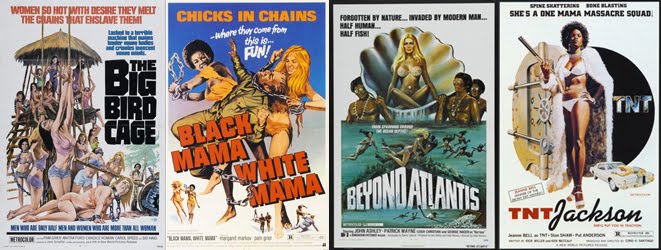
Have you heard of these movies? The Big Bird House? The Hot Box? Cleopatra Wong? How about Ebony, Ivory & Jade, Cover Girl Models, Night of the Cobra Woman, Beyond Atlantis, Dynamite Johnson, TNT Jackson, Savage! or Black Mama, White Mama? If not then you are in for a treat with Machete Maidens Unleashed!, an unofficial sequel to Mark Hartley's brilliant 2008 documentary Not Quite Hollywood that charted the history of Aussie genre films of the 1970s and '80s. All of those titles listed above, and others like The One-Armed Executioner and the Beast of Blood franchise, spawned out of the Filipino film industry with the help of American filmmakers like Roger Corman and now rank as near unknown and forgotten cult niche titles for the amusement of stoned college students.

The same crew that worked on Not Quite Hollywood - the opening night film of MIFF 2008 and my #6 film of that year - have again been assembled to craft this ode to Filipino action movies. Snappily edited, Machete Maidens Unleashed! is simply 85 minutes of clips from movies about nubile young actress firing rifles, karate chopping and waving machetes around in between bouts of baring their breasts while mud wrestling in jungle prisons and causing political uprisings through the backwater swamps of he Philippines.


Interspersed throughout all of this pan and scan insanity (most of the films have never been remastered for DVD release) are interviews with well-known directors like John Landis, Brian Trenchard-Smith and Joe Dante as well as notable behind the scenes figures like George Corman, Eddie Romero, Jack Hill and an assortment of actors that made a presence for themselves in this sub-genre of film. Names like Gloria Hendry, Margaret Markov, Colleen Camp, Judy Brown and Marlene Clark may not be familiar names, but they should be after you've heard their fascinating anecdotes about working in the jungles of the Philippines. Higher profile names like R Lee Ermy, Sid Haig and Chris Mitchum are also there for their own hilarious stories, but unfortunately Pam Grier, surely the biggest name to arise out of the Filipino genre films - she made The Big Doll House, Women in Cages, Twilight People, The Big Bird Cage and Black Mama, White Mama before blaxploitation hits Coffy and Foxy Brown made her a star - refused to be interviewed. While everyone seems at least partially ashamed of their contributions to cinema here, they are all open and admit to being willing participants. It's a shame that Grier didn't see it the same way.

"Rated R for Ridiculous", as the poster says, sums up Mark Hartley's second documentary feature perfectly. I haven't even got into titles such as For Y'ur Height Only that starred Filipino dwarf superstar Weng Weng as a James Bond spoof or Up from the Depths, which was made to cash in on the success of Piranha one year earlier. If movies such as Machete Maidens Unleashed! achieve anything substantial then it's making someone like me really want to seek out movies like Cleopatra Wong (nuns with assault rifles) and Dynamite Johnson (some undecipherable plot that involves a robotic dragon). Hopefully these titles get some sort of DVD release after this movie gets seen by the right people like many of the Ozploitation films did after Not Quite Hollywood.


Sadly, Machete Maidens doesn't achieve the levels of success that director Hartley had with Not Quite Hollywood. Whereas that film spanned various genres from sex comedies to horror and science fiction, this one is far more limited to the films it covers. It is easy to mistake many of the movie clips featured within as being all from the one movie about a group of sexy and sassy American women being held captive in a prison deep within the jungle wherein they must use their sexual force to break out of. There's also a distinct lack of passion compared to its predecessor. Perhaps its the fact that these films are even more obscure than Patrick or Dead-End Drive In of the so-called "Ozploitation" movement, but there's no effort made to show how the effects of these Filipino genre films are still being felt today. Perhaps the Filipino film industry is as closed tight as Imelda Marcos' box of secrets and umbrellas, but Machete Maidens Unleashed doesn't have quite the same insight. Nevertheless, it is still a wild and hilariously entertaining hour and a half of absurd insanity. B

Sunday, August 10, 2008

MIFF Review: Not Quite Hollywood

Some of the adjectives you're sure to read in relation to Mark Hartley's new documentary about the Australian film industry of the 1970s and '80s are "raucous!", "rip snorting!", "crass!" and "hilarious!", which seem quite apt considering they're same terms you would use to describe the films Not Quite Hollywood documents. Taking a fast-paced and visually inventive look at the "ozploitation" films of years past, the film is filled with male and female nudity, absurd violence, foul language and everything else that the sex and gore-filled films of my country's past pride themselves by revelling in.

Spread across Not Quite Hollywood's 98 minute running time - it feels much longer, but in a good way - are clips from so many movies that I lost count after the first five minutes. Some of the movies discussed are good (Brian Trenchard-Smith's Dead End Drive-In, Richard Franklin's Patrick and some are most definitely not (Phillipe Mora's Howling III: The Marsupials, Simon Wincer's Harlequin), but they're all fascinating to watch and experience how they work into the fabric of not only Australia's film industry, but also our identity as a whole.

It's a testament though to Hartley's direction and, especially, the editing by Hartley, Sarah Edwards and Aussie genre director Jamie Blanks, that even the bad movies provide just entertaining fodder. When there are hundreds of movies to choose from and to condense it down to a core group and then represent those by a mere scene or quick grab is quite a task and they carry it off with aplomb. Others have said the film drags, particularly towards the end, but I really could have kept watching it all night long.

The names that Hartley has assembled is mightily impressive. It's fascinating to hear unabashed ozploitation fan Quentin Tarantino wax lyrical on the films of cult director Brian Trenchard-Smith, listen to Dennis Hopper tell of how he had no idea what he was doing on the Australian set of Mad Dog Morgan, Barry Humphries crack wise about Picnic at Hanging Rock and Jamie Lee Curtis being confused as to why she was being asked to star in an Australian movie with, of all people, Stacy Keach. And that's barely scraping the surface of the names involved, which stretches back into the annals of Australian film both known and obscure. It really is marvelous to watch.

In fact, it really is hard to dig very deep at all in a review such as this because Not Quite Hollywood is just overflowing with trivia, tidbits, history and memories. Granted, the film will have a special place for those who grew up watching these films (or, like me, have started to delve into the genre in recent times thanks to DVD), but I also think the film will work well for those who were completely oblivious to it as well.

Unless you're Bob Ellis, and anyone who has seen this exceptionally crafted and wildly entertaining film will know why. B+

Friday, August 8, 2008

Black + White Friday: Dead End Drive-In


At my screening of Mark Hartley's ace documentary Not Quite Hollywood it seemed the audience had quite a laugh-filled reaction to the brief segment reserved for this absolutely terrible horror comedy flick, Howling III: The Marsupials. I doubt many, if any at all, had actually seen it. I know if I hadn't already I would want to see it prono after watching it be discussed in the documentary as it appears to be a riot! Alas, it is not. It's awful. Absolutely awful. And I just so happen to own it on DVD (it came free with a magazine, you see). So, in honour of Not Quite Hollywood and all the ridiculous excessive silliness that it embraces, I decided to use it as this week's black and white specimen.

...unfortunately it's still really shit. That and, this I had forgotten, the quality is really bad. Like, below usual public domain standards. So, to keep the theme, I decided to use a much more normal movie - the excellent (you've heard me harp on and on about it lately) Dead End Drive-In, which just so happens to be Quentin Tarantino's favourite film of the "ozploitation" genre. The film is beautiful to look at in colour, so let's see if it's A-grade B thrillers still work on black and white.


One of my favourite moments in Dead End Drive-In is this quick joke that in the near future there will have been eight Rambo films. We did get to four with Rambo IV releases earlier this year, so they were close!


I like how director Brian Trenchard-Smith routinely puts the STAR DRIVE-IN sign throughout the movie, whether it be front and centre of just in the background. Constantly reminding that they're trapped inside such an un-hostile environment.


You can make anything related to a drive in black and white and it just looks so 1950s. Even if it includes panel vans!


I chose this shot because if you showed someone this picture they wouldn't have any reason to suspect it was from a 1985 Aussie flick about racist gangs trapped inside a post-apocalyptic drive-in. or would they? teehee.


One of the funniest parts of Not Quite Hollywood is when Quentin Tarantino jokes about how every Australian movie of this sort has a gang of youths in it. No matter where it's set, youth gangs will be there! It's funny 'cause it's true. Others things that will always be: the mix between old (jukeboxes) and new (graffiti) along with punk clothes and makeup. Always.


I just like this shot. Not sure why. Doesn't even look like it's from the same movie, actually.


That computer is an important plot point. It makes me giggle. My Commodore64 was more advanced.


I love any shot that has a drive-in movie screen in the background. It has some sort of calming effect on me. Even though what's happening around it is far from comforting.


The movie's most famous (which, considering the film's level of fame, means it's really not famous at all) moment is this record-breaking shot (or so Trenchard-Smith tells us in the audio commentary on the DVD) of a police car crashing through the neon sign seen in image #3. Looks better in colour.


What's kind of creepy is how this doesn't even look real. The early and final scene of Dead End Drive-In have a creepy look to them with it's deep red skies. They sort of look like painted backdrops (the specific name for them escapes me at the moment, ugh). This shot almost looks like it belongs to a computer game. Otherworldly.